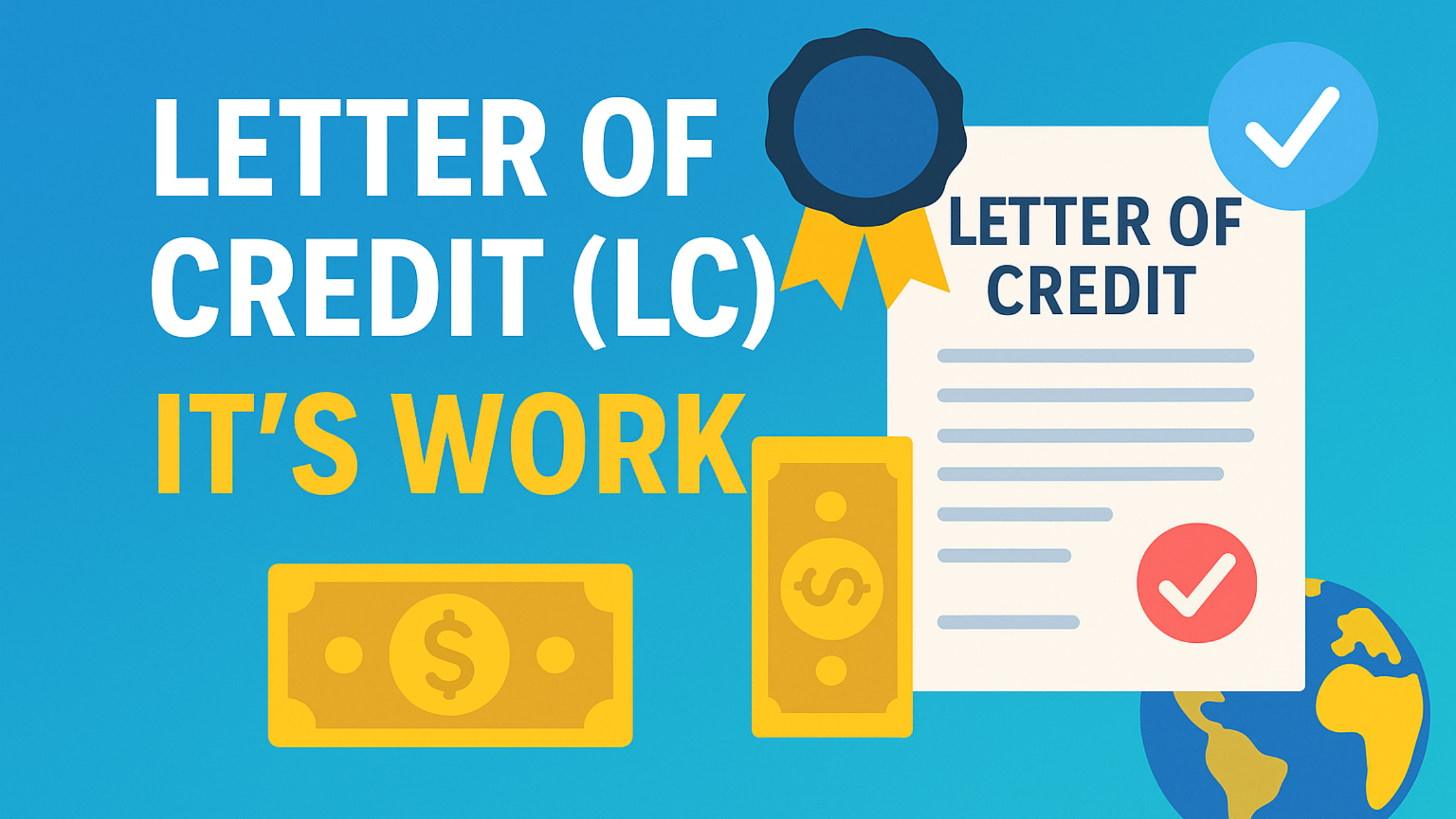
What Is a Letter of Credit (LC)?
A Letter of Credit (LC) is one of the most secure and widely used payment methods in international trade. It ensures that exporters receive payment on time and importers receive goods as agreed. Banks play a major role as a trusted third party, reducing financial and transactional risks for both sides.
Key Insights
- A Letter of Credit ensures secure and risk-free payment between international buyers and sellers.
- It protects exporters from payment failure and assures importers that goods will be shipped as per agreed terms.
- The LC process works through banks, ensuring verification of documents before releasing payment.
- Choosing the right type of LC and maintaining accurate documentation minimizes trade risks.
How a Letter of Credit (LC) Works
A Letter of Credit works by involving the buyer’s bank, which commits to pay the exporter after verifying shipping and commercial documents. Once the exporter submits accurate documents, the bank releases payment. This process ensures safe transactions, minimizes default risk, and streamlines global trade between unfamiliar trading partners.
Who Issues the Letter of Credit (LC)?
A Letter of Credit (LC) is issued by the buyer’s bank, also known as the issuing bank, to guarantee secure payment to the exporter. When the importer applies for an LC, the issuing bank evaluates their creditworthiness and agrees to take responsibility for paying the exporter once all required shipping and commercial documents match the LC terms. Sometimes, a confirming bank or advising bank is also involved to add extra security for the seller. The issuing bank plays a crucial role in reducing risk, ensuring trust, reliability, and smooth international trade transactions between unfamiliar parties across borders. This mechanism promotes safe and transparent global trade dealings.
Key Components of a Letter of Credit
- Applicant: The importer who requests the LC
- Beneficiary: The exporter who receives payment
- Issuing Bank: The buyer’s bank
- Advising/Confirming Bank: The seller’s bank
- Negotiating Bank: Reviews and checks documents
Types of Letters of Credit
1. Revocable LC
Can be changed or canceled without the exporter’s consent.
2. Irrevocable LC
Cannot be altered without agreement from all parties (most common).
3. Commercial Letter of Credit
A standard LC where the buyer’s bank guarantees payment to the seller once all required documents are correctly submitted. It ensures secure trade transactions and reduces financial risk for both parties.
4. Standby Letter of Credit (SBLC)
Acts as a financial backup. Payment is made only if the buyer fails to meet obligations. It provides security and functions like a guarantee rather than a primary payment method.
5. Revolving Letter of Credit
Used for repeated shipments over a period without issuing a new LC each time. It automatically renews by time or value, making trade faster and convenient for long-term buyers and suppliers.
6. Traveler’s Letter of Credit
Issued to travelers for withdrawing money or making payments abroad. It ensures banks in foreign countries honor the credit, providing secure access to funds during international travel.
7. Confirmed Letter of Credit
A second bank (confirming bank) adds its guarantee along with the issuing bank. This provides extra security to the exporter, especially when the buyer’s bank or country is considered high-risk.
How a Letter of Credit Works – Step-by-Step Eplained
1. Buyer and Seller Agree on LC Payment
The importer (buyer) and exporter (seller) finalize a trade agreement and choose a Letter of Credit as the payment method for security.
2. Buyer Applies for the LC
The importer requests their issuing bank to issue an LC in favor of the exporter, providing contract details and required documents.
3. Issuing Bank Sends LC to Advising Bank
The issuing bank prepares the LC and sends it to the advising bank (usually in the exporter’s country) for verification and delivery to the exporter.
4. Exporter Reviews the LC
The exporter checks all LC terms, conditions, and required documents. If everything matches, the exporter proceeds with production and shipment.
5. Exporter Ships Goods
The exporter ships the goods and collects shipping documents like Bill of Lading, Commercial Invoice, Packing List, etc.
6. Exporter Submits Documents to Bank
The exporter submits all required documents to the advising bank, which forwards them to the issuing bank for validation.
7. Issuing Bank Verifies Documents
The issuing bank checks whether all documents strictly comply with LC terms. This step ensures accuracy and authenticity.
8. Payment Is Released
If documents are correct, the issuing bank releases payment to the exporter (via advising bank).
If discrepancies exist, payment may be delayed until corrected.
9. Issuing Bank Gives Documents to Buyer
After payment, the issuing bank hands over the shipping documents to the importer to claim the goods.
10. Buyer Collects the Goods
The importer uses the documents to clear customs and receive the goods from the shipping line.
Why Businesses Use Letters of Credit
Businesses use Letters of Credit because they provide a secure and reliable payment method in international trade. An LC reduces the risk of non-payment, builds trust between new buyers and sellers, and ensures transactions happen smoothly. It also offers legal protection, helps meet compliance, and supports safer global business operations.
Documents Required Under a Letter of Credit
Under a Letter of Credit, both the exporter and importer must submit specific documents to ensure smooth payment, compliance, and verification of shipment. These documents act as proof that the exporter has met all terms and conditions stated in the LC.
1. Commercial Invoice
Shows product details, value, buyer–seller information, and must match LC terms exactly.
2. Packing List
Lists quantity, weight, packaging type, and item-wise shipment details.
3. Bill of Lading / Airway Bill
Proof of shipment issued by the carrier, confirming goods are loaded and shipped.
4. Certificate of Origin (CoO)
Issued by the Chamber of Commerce, confirming the manufacturing origin of goods.
5. Insurance Certificate / Marine Insurance Policy
Verifies that goods are insured during transit, as required by LC terms.
6. Inspection Certificate
Confirms goods meet quality standards, mandatory when requested in the LC.
7. Draft / Bill of Exchange
A written demand by the exporter asking the issuing bank to release the payment.
8. Other LC-Specific Documents
Depending on LC conditions, additional documents may include:
- Fumigation Certificate
- Phytosanitary Certificate
- Weight Certificate
- Beneficiary Certificate
- Compliance certificates
Advantages of Using a Letter of Credit
A Letter of Credit provides strong financial security for both exporters and importers. It guarantees timely payment, reduces the risk of non-payment, and builds trust in international trade. It also ensures compliance with agreed terms, supports smooth transactions, and helps businesses trade confidently across borders here in it.
Conclusion:
A Letter of Credit remains essential in global trade because it provides security, trust, and guaranteed payment between exporters and importers across international borders. Its structured process reduces financial risks and ensures smooth transactions. However, the effectiveness of an LC depends on accuracy and strict compliance with all terms and documentation. Even small errors can lead to delays or non-payment, making careful attention to detail crucial. Overall, an LC is a powerful tool that supports reliable, transparent, and efficient global trade.
FAQs:
1. What is a Letter of Credit (LC)?
A Letter of Credit is a financial instrument issued by a bank guaranteeing that the exporter will receive payment once all LC terms and required documents are submitted correctly.
2. Why is a Letter of Credit used in international trade?
LCs minimize risks for both buyers and sellers by ensuring secure payment, reducing trust issues, and protecting against non-payment or shipment-related disputes.
3. Who issues a Letter of Credit?
A Letter of Credit is issued by the buyer’s bank (issuing bank) on behalf of the importer to assure the exporter that payment will be made if all conditions are met.
4. What documents are required under an LC?
Common documents include the commercial invoice, packing list, bill of lading/airway bill, certificate of origin, insurance policy, and any other documents specified in the LC terms.
5. What happens if the documents do not match the LC conditions?
Even minor discrepancies can lead to delays or rejection of payment. The bank will not release funds until all documents match the LC requirements exactly.
Related Posts:
DGFT IEC Registration: Step-by-Step Guide for New Exporters
RoDTEP Scheme Explained: Understand How to Claim Your Refund in 2026