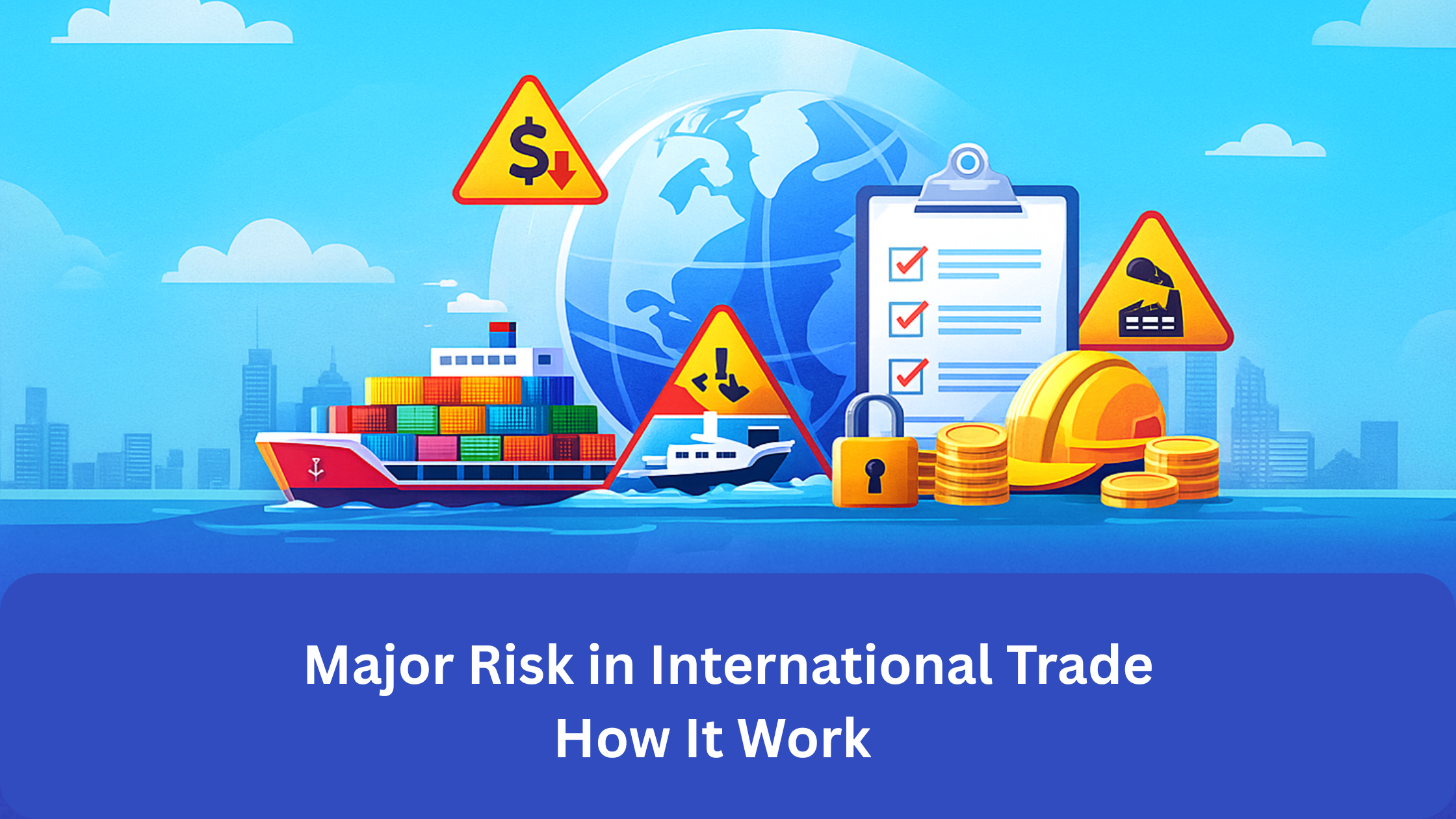
Major Risks in International Trade and How to Manage Them
Major risks in international trade include payment delays, currency fluctuations, political instability, and documentation errors. Businesses can manage these risks through proper risk assessment, insurance, secure payment methods, and compliance checks. Effective planning and strong export-import strategies help protect profits and ensure smooth cross-border transactions.
Key Insights
- International trade involves multiple risks: financial, commercial, political, logistical, legal, and operational.
- Risk management ensures smooth, profitable, and uninterrupted business operations.
- Tools like letters of credit, insurance, hedging, and compliance systems greatly reduce exposure.
- Accurate documentation and due diligence are essential for preventing losses.
- Diversification of suppliers and markets helps avoid over-dependence and disruption.
Introduction to International Trade Risks
International trade connects businesses to global markets, but it also brings multiple uncertainties due to diverse economic conditions, shifting regulations, political instability, currency fluctuations, and logistical challenges. These uncertainties can interrupt shipments, increase costs, and affect overall profitability. Therefore, identifying and managing trade risks in advance becomes essential for ensuring smooth and secure global operations. A proactive risk-management approach helps businesses anticipate potential disruptions, strengthen supply chains, protect financial interests, and make informed decisions. By understanding these challenges early, companies can build resilience, improve planning, and maintain competitiveness in the international marketplace.
Financial Risks in International Trade
Currency Fluctuation Risk
Currency fluctuation risk arises when exchange rates change between the time a trade deal is signed and payment is made. These unpredictable shifts can reduce profit margins, increase costs, or cause financial losses. Managing this risk requires using tools like forward contracts, hedging, and pricing strategies to maintain financial stability.
Payment Default Risk
Payment default risk occurs when the foreign buyer fails to pay on time or refuses payment after shipment. This risk is common in new or unstable markets. Exporters can reduce exposure by using secure payment methods such as Letters of Credit, advance payment, trade credit insurance, and thorough buyer verification.
Impact of Financial Instability.
Price volatility risk arises when unstable global financial conditions cause sudden changes in commodity, raw material, or product prices. Such fluctuations directly affect exporters and importers by reducing profit margins, increasing procurement costs, and creating uncertainty in long-term contracts. Unpredictable pricing makes planning difficult and exposes businesses to significant financial losses.
Strategies to Manage Price Volatility Risk.
Businesses manage price volatility through strategies such as hedging, which locks in stable prices; using Letters of Credit (LC) to ensure secure payments; advance payment terms to reduce financial uncertainty; and trade credit insurance to protect against buyer non-payment. These tools safeguard exporters and importers from unpredictable market shifts in global trade.
Commercial Risks
Buyer Insolvency
Buyer insolvency occurs when an overseas buyer becomes financially unable to pay for goods after shipment or delivery. This commercial risk can severely impact exporters which leads to cause revenue loss, shipment delays, and cash-flow disruptions. To safeguard against this, businesses often rely on advance payments, Letters of Credit, credit checks, and trade credit insurance.
Contract Breach
Contract breach occurs when a buyer or seller fails to meet agreed terms, like- delivery timelines, product specifications, or payment conditions. In the international trade, this risk can lead to financial loss, disputes, and shipment delays. Exporters can reduce this risk through detailed contracts, legal safeguards, performance guarantees, and documented communication here in it.
Political and Country Risks
Trade Restrictions & Tariffs
Trade restrictions and tariffs increase the cost of cross-border transactions and reduce market access. They directly affect exporter competitiveness and profitability, making it harder to maintain stable international trade operations.
Political Instability
Political instability creates uncertainty through sudden policy changes, conflict, or government collapse. It disrupts supply chains, delays payments, and increases operational risks for exporters and importers operating in affected countries.
Logistics and Transportation Risks
Shipment Delays
Shipment delays occur due to port congestion, customs issues, weather conditions, or carrier failures. These delays disrupt delivery schedules, increase storage costs, and can damage business relationships with international buyers.
Damage or Loss of Goods
Goods may get damaged or lost during transit due to poor handling, accidents, or packaging failures. This results in financial losses, insurance claims, and customer dissatisfaction in global trade.
Legal and Compliance Risks
Documentation Errors
Documentation errors occur when export or import papers contain incorrect, incomplete, or mismatched details. Such mistakes cause shipment delays, penalties, customs rejections, and financial losses, affecting smooth international trade operations.
Customs Violations
Customs violations happen when traders fail to follow import-export rules, such as misdeclaration, under-invoicing, or restricted goods. These violations lead to heavy fines, shipment seizures, and long-term compliance issues.
Operational & Supply Chain Risks
Supplier Failure
Supplier failure occurs when a supplier cannot deliver goods on time or as agreed due to financial, operational, or quality issues. This disrupts production, delays shipments, and creates serious supply chain instability.
Inventory Shortage
Inventory shortage happens when stock levels fall below demand due to poor forecasting, delays, or sudden market changes. It leads to missed orders, lost revenue, and weakened customer trust in international trade.
Cybersecurity & Digital Risks
Payment Frauds
Payment frauds occur when cybercriminals manipulate invoices, payment details, or financial communication to divert funds. This risk can lead to major financial losses if exporters or importers fail to verify digital transactions.
Data Breaches
Data breaches involve unauthorized access to sensitive business information, including financial records, trade documents, and customer data. Such breaches can disrupt operations, damage trust, and expose companies to legal and financial consequences.
How to Manage International Trade Risks Effectively
Managing international trade risks effectively requires a strategic and proactive approach. Businesses must identify key risks such as currency fluctuations, payment defaults, political instability, logistics failures, and compliance issues. Conducting thorough buyer verification, securing strong contracts, and staying updated on global regulations help reduce commercial and legal risks. Financial tools like Letters of Credit, hedging, export insurance, and advance payments safeguard against monetary losses. Choosing reliable logistics partners, maintaining accurate documentation, and using tracking systems strengthen supply chain stability. Additionally, adopting cybersecurity measures protects digital transactions and sensitive data. By planning ahead, assessing risks regularly, and implementing strong control measures, companies can minimize disruptions and ensure safe, profitable international trade.
Conclusion:
International trade will always involve risks—financial, commercial, political, and operational—but these challenges are not impossible to handle. With the right strategies, such as strong documentation, secure payment methods, compliance checks, supplier reliability, and effective risk-mitigation tools, businesses can significantly reduce uncertainties. By proactively identifying potential threats and implementing smart, structured solutions, companies can safeguard their operations and ensure smoother, more profitable global trade. Smart risk management doesn’t eliminate risk—it transforms it into manageable, controllable steps that protect long-term business growth here in it.
FAQs:
1. What are the major risks involved in international trade?
International trade involves several risks such as financial risks (currency fluctuation, payment defaults), commercial risks (buyer insolvency, contract breach), political risks, logistics delays, legal/compliance issues, and cybersecurity threats.
2. How can businesses manage currency fluctuation risk?
Businesses can manage currency risks through hedging, forward contracts, invoicing in stable currencies, and maintaining multi-currency accounts to reduce exchange rate exposure.
3. Why is payment default a common risk in global trade?
Payment defaults occur due to weak buyer finances, political instability, or fraud. Using Letters of Credit (LC), advance payments, and trade credit insurance helps reduce this risk.
4. What are political and country risks in international trade?
These include sudden changes in government policies, trade restrictions, tariffs, embargoes, or political instability that can disrupt shipments or increase costs.
5. How can logistics and transportation risks be minimized?
Businesses can reduce logistics risks by choosing reliable carriers, using insured shipments, tracking consignments, and planning buffers for unexpected delays.
6. What compliance risks affect exporters and importers?
Incomplete documentation, inaccurate declarations, or failing to meet customs regulations can lead to fines, delays, or shipment rejections. Proper verification helps avoid these issues.
7. How can businesses reduce the risk of buyer insolvency?
Exporters should conduct background checks, use credit reports, opt for secure payment terms, request guarantees, or use export credit insurance.
8. What role does insurance play in risk management?
Insurance such as marine insurance, credit insurance, and cargo insurance protects businesses from financial loss due to damage, theft, defaults, or unforeseen trade issues.
9. How can cybersecurity risks impact international trade?
Cyber risks such as data breaches, hacking, and payment fraud can disrupt operations and cause financial loss. Using secure digital systems and encryption reduces this threat.
10. What is the best overall strategy to manage international trade risks?
A combination of strong documentation practices, reliable partners, diversified suppliers, financial safeguards, compliance checks, and continuous risk monitoring ensures smooth and stable international trade operations.
Related Posts:
DGFT IEC Registration: Step-by-Step Guide for New Exporters
RoDTEP Scheme Explained: Understand How to Claim Your Refund in 2026