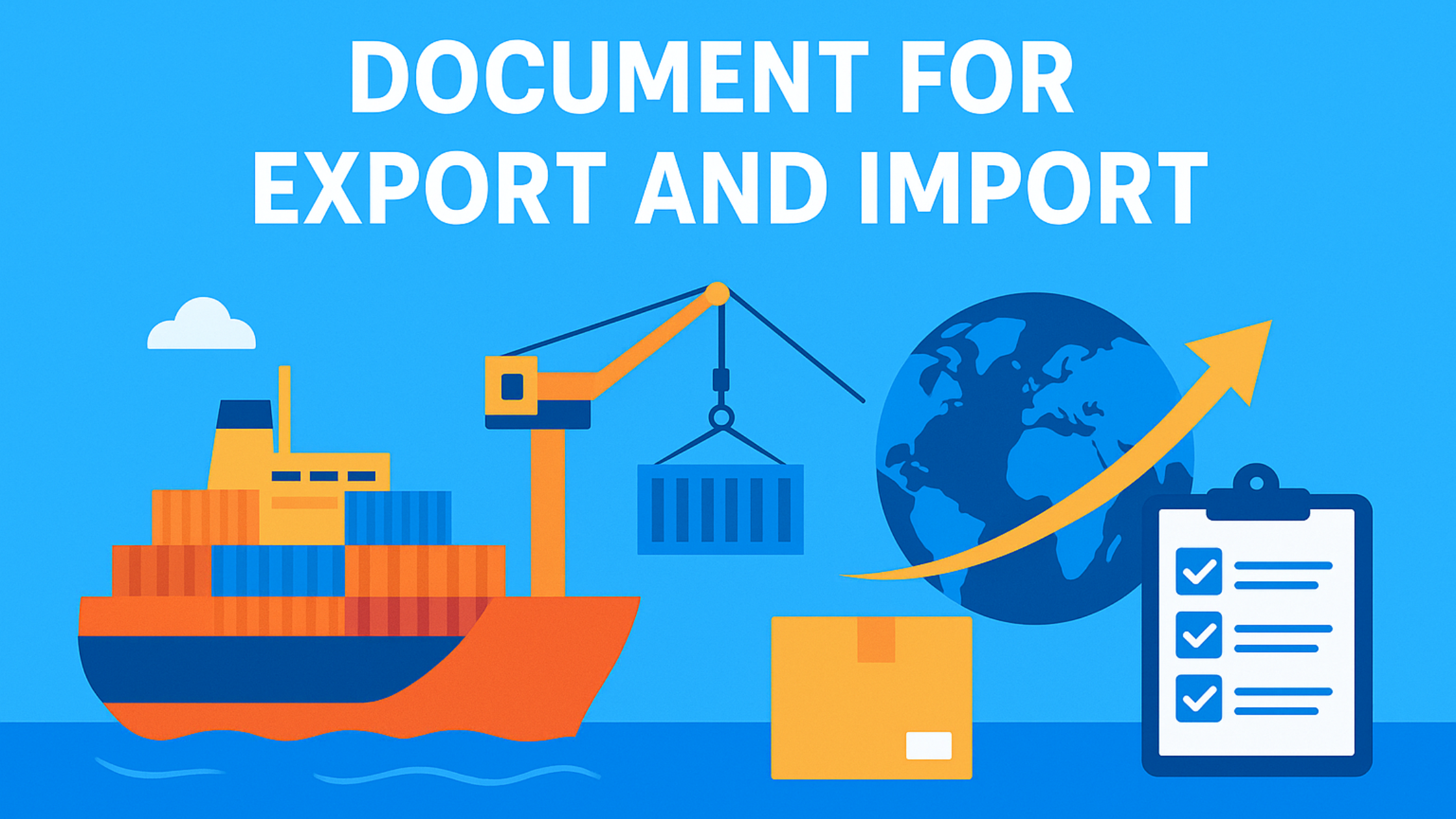
Documentation Checklist for Export and Import
The Government of India has simplified the ‘Ease of Business’ process by reducing export-import documentation requirements. However, the required documents vary depending on the specific product being traded. For importing or exporting goods in India, certain mandatory documents must still be submitted as per the provisions of the Foreign Trade Act, 1992 to ensure compliance.
Key Insights
- Proper documentation is essential for avoiding delays and penalties in international trade.
- Every export-import transaction requires both mandatory and supporting documents.
- Accuracy in invoices, packing lists, and HS codes is crucial for smooth customs clearance.
- Digital document management reduces errors and improves efficiency.
- A well-structured documentation checklist ensures compliance, transparency, and faster business operations.
Introduction to Export-Import Documentation
Effective export-import documentation is the foundation of smooth international trade operations. Accurate paperwork ensures that goods move across borders without delays, disputes, or compliance issues. Every document—whether it’s an invoice, packing list, shipping bill, or certificate—serves as legal proof of the transaction and helps authorities verify product details, taxes, valuation, and eligibility for benefits.
Proper documentation plays a crucial role in customs clearance, as even minor errors can lead to inspections, penalties, or shipment hold-ups. It also ensures adherence to regulatory standards set by international trade laws, logistics partners, and destination countries. When managed well, documentation enhances trade efficiency by reducing risks, improving transparency, and speeding up processing time. In a competitive global market, strong documentation practices not only protect businesses but also strengthen their credibility and operational reliability.
Documents Required for Export of Goods
It requires the following documents for the export of goods from India:
- Bill of Lading / Air Way Bill
- Commercial invoice-cum-packing list
- Shipping ill or Bill of Export
Document Required for Import of Goods
It requires the following documents for the import of goods into India:
- Bill of Lading / Air Way Bill
- Commercial invoice-cum-packing list
- Bill of Entry
In addition to the above documents, Import Export Code (IE Code) would always be required to undertake an import or export transaction.
World Bank’s 2015 Report listed mandatory documents respectively for export and import to India.
Why Documentation Matters in International Trade
The Document plays very important role in this business because here we are been identified and recognised only on the basic of the valid document which is been provided here in this export and import business. Accurate and valid documentation is the backbone of international trade, ensuring that goods move smoothly across borders without delays or disputes. Every shipment—whether export or import—requires legally compliant paperwork such as invoices, packing lists, certificates of origin, and transport documents. These records help customs authorities verify the shipment’s details, calculate duties, and assess compliance with international regulations.
Proper documentation also protects businesses from penalties, shipment holds, and financial losses. It ensures transparency in transactions, reduces the risk of fraud, and supports claim settlements in case of damage or discrepancies. For exporters and importers, maintaining complete and error-free documents speeds up customs clearance, strengthens buyer trust, and enhances trade efficiency. In a competitive global market, strong documentation practices are essential for avoiding risks and ensuring smooth, lawful, and profitable trade operations in it.
Here’s why documentation matters:
1. Ensures Legal Compliance
Proper export-import documentation ensures that every shipment follows international laws, customs rules, and government regulations. It helps businesses avoid penalties, shipment delays, and legal disputes. By maintaining accurate records, traders demonstrate transparency, meet compliance standards, and build trust with authorities, ensuring smooth and risk-free global trade operations.
2. Facilitates Smooth Customs Clearance
Accurate export-import documentation ensures that customs authorities can quickly verify shipment details, product classification, and compliance requirements. When documents are complete and error-free, it minimizes inspections, prevents delays, and speeds up clearance. This helps goods move efficiently across borders, reducing costs and ensuring timely delivery to buyers or suppliers.
3. Protects Financial Interests
Proper export-import documentation safeguards businesses from financial losses by clearly recording product value, payment terms, duties, and taxes. Accurate paperwork helps prevent disputes with buyers or customs authorities, ensures timely payments, and supports insurance claims in case of damage or loss. This reliability strengthens profitability and builds long-term trust in global trade.
4. Supports Logistics and Shipping
Accurate documentation ensures goods move smoothly through every stage of the logistics chain. Documents like the Bill of Lading, Packing List, and Shipping Instructions guide carriers, confirm cargo details, and prevent delays. Proper paperwork helps coordinate transport, reduces handling errors, and ensures timely and efficient delivery in global trade.
5. Provides Evidence in Case of Disputes
Documentation plays a crucial role in resolving disputes in international trade. Records such as invoices, contracts, inspection reports, and shipping documents act as legal evidence to verify the terms agreed upon. These documents help prove responsibility, protect business interests, and ensure fair and transparent resolution when conflicts arise.
Essential Documents Required for Export
- Commercial Invoice
- Packing List
- Shipping Bill / Bill of Export
- Bill of Lading / Airway Bill
- Certificate of Origin
- Export License (if applicable)
- Insurance Certificate
- Letter of Credit or Payment Agreement
Essential Documents Required for Import
- Bill of Entry
- Commercial Invoice from Supplier
- Packing List
- Bill of Lading / Airway Bill
- Import License (if applicable)
- Insurance Certificate
- Certificate of Origin
- HS Code Declaration
- Customs Duty Receipts
Common Mistakes which Traders Make in Documentation
1. Incomplete or Incorrect Information
Many traders submit documents with wrong HS codes, spelling errors, mismatched quantities, or incorrect invoice values. These small errors can lead to customs delays, penalties, or shipment rejection.
2. Mismatch Between Documents
Details on the Commercial Invoice, Packing List, and Shipping Bill must match. Even minor inconsistencies can raise red flags during customs inspection and cause unnecessary verification.
3. Ignoring Country-Specific Requirements
Every country has unique import regulations. Traders often overlook required certificates or licenses, leading to non-compliance and delayed clearance.
4. Missing Mandatory Certificates
Important documents such as Certificate of Origin, Phytosanitary Certificates, or Inspection Reports are sometimes forgotten or incomplete, making the shipment non-compliant.
5. Using Expired or Outdated Registrations
Failure to renew IEC, RCMC, insurance, or export licenses on time causes disruptions in the documentation process and affects eligibility for benefits.
6. Poor Record Keeping
Traders who do not maintain organized records struggle during audits, payment verification, or dispute resolution, which weakens financial transparency.
7. Incorrect Shipping Documents
Errors in Bill of Lading or Airway Bill—like wrong consignee details or port information—can delay cargo release and create logistical problems.
8. Lack of Documentation Verification
Submitting documents without cross-checking leads to errors that could have been easily avoided. Verification ensures accuracy and compliance.
9. Failure to Follow Updates in Trade Laws
Export-import regulations change frequently. Traders who do not stay updated may unintentionally violate new documentation rules.
10. Not Taking Professional Assistance When Needed
Many beginners prepare documents without guidance, resulting in costly mistakes. Expert support helps ensure accuracy and compliance.
Conclusion:
A proper documentation checklist is essential for every exporter and importer because it helps avoid errors, delays, and compliance issues. When all documents are organized and accurate, your shipment moves smoothly through customs, payments are processed on time, and business risks are minimized. It also strengthens trust with global buyers and ensures your operations remain professional and reliable. Simply put, a documentation checklist is more than paperwork—it is a smart tool that protects your business, saves time, and ensures successful international trade.
FAQs:
1. What is a documentation checklist in export and import?
A documentation checklist is a structured list of all mandatory commercial, regulatory, financial, and shipping documents required to process international trade smoothly and legally.
2. Why is documentation important in export and import?
Accurate documentation ensures customs clearance, prevents penalties, avoids shipment delays, and protects both exporters and importers from financial and legal risks.
3. What are the essential documents needed for export shipments?
Key export documents include the Commercial Invoice, Packing List, Shipping Bill, Bill of Lading/Airway Bill, IEC, Certificate of Origin, and financial documents like Letter of Credit or BRC.
4. Are export and import documentation requirements the same for all products?
No. Documentation varies based on product type, destination country, regulatory restrictions, and transportation mode. Some goods require special certificates like Phytosanitary or Fumigation Certificates.
5. How can traders avoid mistakes in documentation further?
Traders can avoid errors by double-checking document details, following customs guidelines, maintaining updated records, using digital tools, and working with experienced freight forwarders or consultants in it.
Related Posts:
DGFT IEC Registration: Step-by-Step Guide for New Exporters
RoDTEP Scheme Explained: Understand How to Claim Your Refund in 2026