
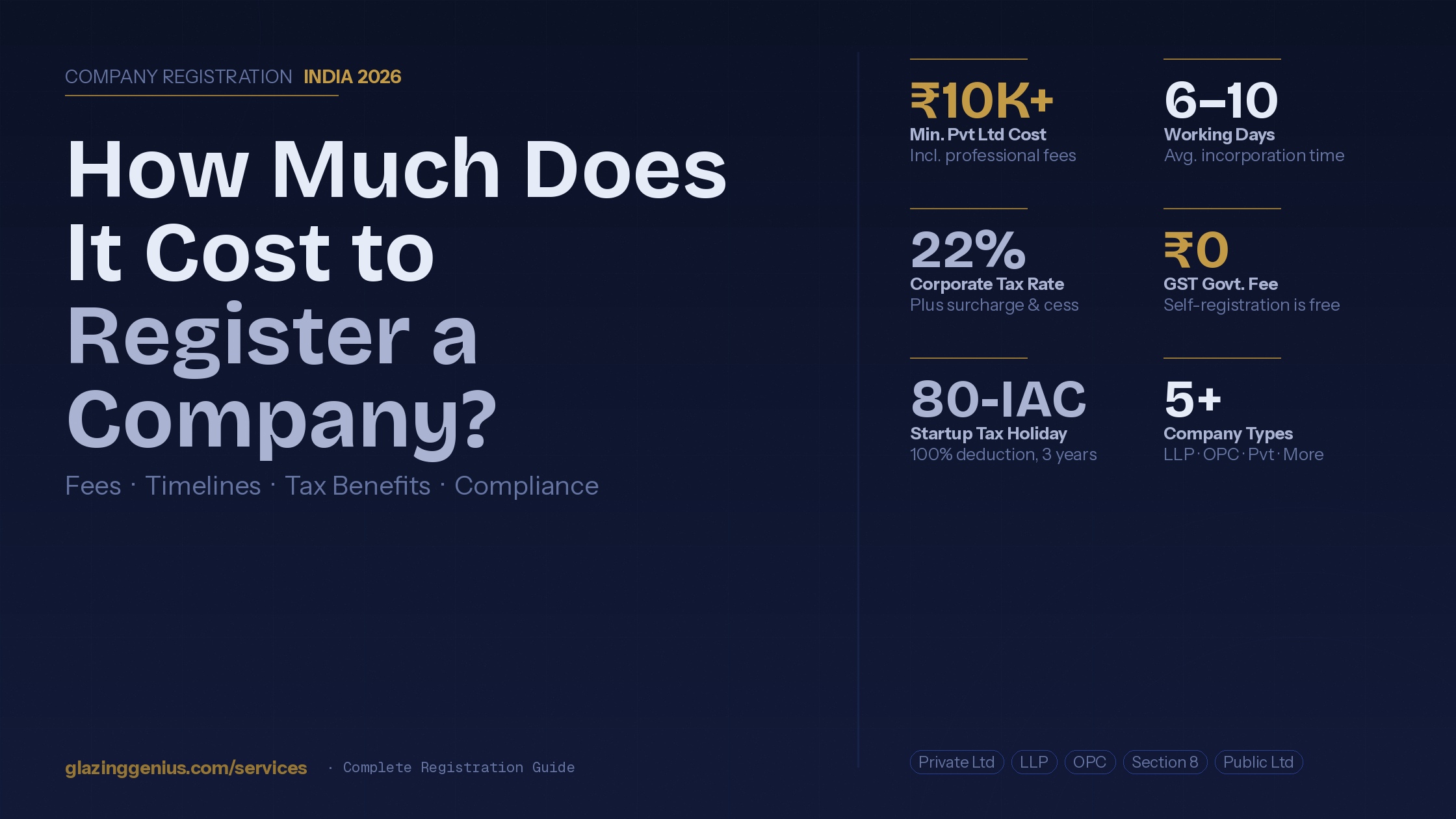
How Much Does It Cost to Register a Company in India in 2026?
Starting a business in India is exciting. But before you launch, you need to register your company legally. Many new entrepreneurs ask the same question: how much does it cost to register a company in India in 2026?
The answer depends on many factors. The type of company you choose matters. The state you register in matters. The number of directors and shareholders matters too.
This guide covers everything you need to know. You will learn about registration fees, timelines, tax benefits, and post-registration compliance. By the end, you will feel confident about starting your registration journey.
Overview of Company Registration in India 2026
The Ministry of Corporate Affairs (MCA) governs company registration in India. All registrations happen through the MCA21 portal. The process has become largely digital and paperless in recent years.
In 2026, the Indian government has streamlined the process further. New entrepreneurs can now complete most steps online. The average time to register a Private Limited Company has dropped to 6–10 working days.
Key governing laws:
- The Companies Act, 2013
- The Limited Liability Partnership Act, 2008
- The Income Tax Act, 1961
India registered over 2.3 lakh new companies in FY 2024–25 alone. India’s startup ecosystem is now the third largest in the world.
Why Register a Company in India?
Many business owners ask whether registration is truly necessary. The answer is yes — and for very good reasons.
Legal Protection and Credibility
A registered company is a separate legal entity. This protects you personally from business liabilities. Banks, investors, and clients trust registered companies more.
Access to Funding and Loans
Registered companies can raise funds from angel investors and venture capitalists. Banks offer business loans more readily to registered entities. Government schemes like Startup India apply only to registered companies.
Tax Benefits and Deductions
Registered companies enjoy significant tax deductions. You can claim expenses like salaries, rent, and depreciation. LLPs and startups get additional tax holiday benefits under Section 80-IAC.
Brand Protection
Your company name gets legally protected after registration. Nobody else can use your registered name or trademark.
Government Tenders and Contracts
Most government tenders require you to be a registered company. Without registration, you miss out on large public sector contracts.
Employee Benefits and ESOPs
Registered Private Limited Companies can offer Employee Stock Option Plans (ESOPs). This helps attract top talent, especially in the tech sector.
Types of Company Registrations in India
India offers several business structures. Each has different registration costs, compliance needs, and tax treatments.
1. Limited Liability Partnership (LLP)
An LLP combines the flexibility of a partnership with limited liability protection. It is popular among professionals like lawyers, architects, and consultants.
- Minimum 2 designated partners required
- No minimum capital requirement
- Partners’ liability is limited to their agreed contribution
- Lower compliance burden compared to Private Limited Companies
- Governed by the LLP Act, 2008
Best for: Small professional firms, service-based businesses, and businesses with 2–10 founders.
Government Registration Fee: ₹500 to ₹5,600 (based on contribution amount)
2. One Person Company (OPC)
An OPC allows a single entrepreneur to run a company with limited liability. It was introduced under the Companies Act, 2013.
- Only one member and one nominee required
- Member must be an Indian citizen and resident
- Automatic conversion to Private Limited Company when turnover crosses ₹2 crore
- Full limited liability protection for the sole owner
Best for: Solo entrepreneurs, freelancers, and individual consultants who want corporate credibility.
Government Registration Fee: Approximately ₹2,000–₹5,000
3. Private Limited Company
This is the most popular structure for startups and growing businesses. It offers strong legal protection, the ability to raise funds, and high credibility.
- Minimum 2 directors and 2 shareholders required
- Maximum 200 shareholders allowed
- Shares cannot be publicly traded
- Mandatory annual audits and ROC filings
- Eligible for Startup India recognition
Best for: Tech startups, e-commerce businesses, companies seeking VC funding.
Government Registration Fee: ₹2,000–₹12,000 (based on authorised capital)
4. Public Limited Company
A Public Limited Company can raise capital from the general public. It has more compliance requirements than a Private Limited Company.
- Minimum 3 directors required
- Minimum 7 shareholders required
- Can list shares on stock exchanges (BSE, NSE)
- More regulatory oversight from SEBI and MCA
- Must publish audited financial statements publicly
Best for: Large businesses, companies planning an IPO, and established enterprises.
Government Registration Fee: ₹15,000–₹60,000+ (based on authorised capital)
5. Section 8 Company (Non-Profit Organisation)
A Section 8 Company is for non-profit activities like charity, education, sports, or social welfare. It enjoys tax exemptions and special licensing.
- Profits cannot be distributed to members
- Income is reinvested into the organisation’s objectives
- Exempt from stamp duty on registration documents
- Eligible for 80G and 12A tax exemptions for donors
- Governed by Section 8 of the Companies Act, 2013
Best for: NGOs, charitable trusts, educational institutions, and social enterprises.
Government Registration Fee: ₹2,000–₹5,000 (lower fees apply)
Step-by-Step Process for Company Registration in India 2026
Follow these steps to register your company correctly in 2026.
Step 1: Obtain a Digital Signature Certificate (DSC)
Every director must get a DSC. You can apply through MCA-approved certifying agencies. This costs ₹1,000–₹2,000 per director and takes 1–2 days.
Step 2: Apply for Director Identification Number (DIN)
All directors need a DIN. You apply for this through the SPICe+ form on the MCA portal. New directors get DIN assigned automatically during company incorporation.
Step 3: Name Reservation via RUN or SPICe+
You must reserve your company name through the MCA portal. Use the RUN (Reserve Unique Name) facility or propose names directly in the SPICe+ form. MCA checks name availability and trademark conflicts.
Tips for name approval:
- Avoid names too similar to existing companies
- Avoid names that suggest government connections
- Avoid generic or descriptive names
Step 4: File the SPICe+ Form
SPICe+ is the integrated company registration form. It covers company incorporation, PAN and TAN application, GSTIN application, EPF and ESIC registration, and bank account opening through linked banks.
Step 5: Draft the MOA and AOA
The Memorandum of Association (MOA) defines your company’s objectives. The Articles of Association (AOA) define internal governance rules. Both are submitted digitally with the SPICe+ form.
Step 6: Pay Government Fees
Government fees depend on your company type and authorised capital. The MCA portal calculates fees automatically.
Step 7: Receive Certificate of Incorporation
After MCA verifies your documents, they issue the Certificate of Incorporation (COI). This includes your Company Identification Number (CIN), PAN, and TAN.
| Total timeline: 6–10 working days for Private Limited Company registration. |
A Detailed Breakdown of Company Registration Cost in India
Understanding the full cost picture helps you budget correctly. Costs fall into two categories: government fees and professional fees.
Government Fees for Company Registration in 2026
| Company Type | Authorised Capital | Govt. Registration Fee |
| OPC | Up to ₹10 lakh | ₹2,000 |
| OPC | ₹10L–₹50L | ₹3,000 |
| LLP | Up to ₹1 lakh | ₹500 |
| LLP | ₹1L–₹5L | ₹2,000 |
| LLP | ₹5L–₹10L | ₹4,000 |
| LLP | Above ₹10L | ₹5,600 |
| Private Ltd | Up to ₹1 lakh | ₹2,000 |
| Private Ltd | ₹1L–₹5L | ₹4,000 |
| Private Ltd | ₹5L–₹10L | ₹6,000 |
| Private Ltd | ₹10L–₹25L | ₹8,000 |
| Private Ltd | ₹25L–₹1 crore | ₹10,000 |
| Private Ltd | Above ₹1 crore | ₹12,000 |
| Public Ltd | ₹1L–₹5L | ₹15,000 |
| Public Ltd | ₹5L–₹25L | ₹25,000 |
| Public Ltd | Above ₹1 crore | ₹60,000+ |
| Section 8 | Flat Rate | ₹2,000 |
Note: Fees are approximate and subject to MCA revisions. Always verify on the MCA21 portal.
DSC Costs
| Item | Cost per Person |
| Class 3 DSC (2-year validity) | ₹1,000–₹2,000 |
| DSC renewal | ₹800–₹1,500 |
Stamp Duty on MOA and AOA (State-Wise)
| State | Approximate Stamp Duty |
| Maharashtra | ₹1,000–₹5,000 |
| Delhi | ₹1,000–₹3,000 |
| Karnataka | ₹500–₹2,000 |
| Uttar Pradesh | ₹2,000–₹7,000 |
| Tamil Nadu | ₹1,000–₹4,000 |
Section 8 Companies are exempt from stamp duty on MOA and AOA in most states.
Costs and Timelines for Private Limited Company Registration in India
Full Cost Breakdown: Private Limited Company
| Cost Component | Estimated Amount |
| DSC for 2 Directors | ₹2,000–₹4,000 |
| Government Filing Fee (SPICe+) | ₹2,000–₹12,000 |
| Stamp Duty on MOA and AOA | ₹1,000–₹7,000 |
| PAN Application | Included in SPICe+ |
| TAN Application | Included in SPICe+ |
| Professional/CA Fees | ₹5,000–₹20,000 |
| Total Estimated Cost | ₹10,000–₹45,000 |
Timeline Breakdown for Private Limited Company
| Step | Time Required |
| DSC issuance | 1–2 working days |
| Name reservation (RUN) | 1–2 working days |
| SPICe+ filing and processing | 3–5 working days |
| Certificate of Incorporation | 1–2 working days |
| Total | 6–10 working days |
Costs of Other Essential Registrations for Company Incorporation
Beyond basic company registration, most businesses need additional registrations. Here are the costs.
GST Registration
| Item | Cost |
| Government fee | Nil (Free) |
| Professional assistance fee | ₹1,000–₹5,000 |
GST registration is mandatory if your annual turnover exceeds ₹40 lakh (₹20 lakh for service providers and North-East states).
MSME / Udyam Registration
| Item | Cost |
| Government fee | Nil (Free) |
| Professional assistance fee | ₹500–₹2,000 |
MSME registration gives you access to priority lending, lower interest rates, and government subsidies.
Trademark Registration
| Item | Cost |
| Government fee (Startup/Small Entity) | ₹4,500 per class |
| Government fee (Others) | ₹9,000 per class |
| Professional fees | ₹2,000–₹10,000 |
Import Export Code (IEC)
| Item | Cost |
| Government fee | ₹500 |
| Professional fee | ₹1,000–₹3,000 |
FSSAI License (Food Businesses)
| License Type | Annual Fee |
| Basic FSSAI Registration | ₹100/year |
| State FSSAI License | ₹2,000–₹5,000/year |
| Central FSSAI License | ₹7,500/year |
Shop and Establishment Act Registration
This registration is mandatory for most businesses operating a physical office or shop. Fees range from ₹1,000 to ₹10,000 depending on the number of employees and state.
Tax Benefits and Legal Advantages of Registering a Company
Tax Holiday for Startups (Section 80-IAC)
Eligible startups registered as Private Limited or LLP can claim 100% tax deduction on profits for 3 consecutive years out of their first 10 years of operation.
Presumptive Taxation for Small Companies (Section 44AD)
Businesses with annual turnover up to ₹3 crore can opt for presumptive taxation. You pay tax on 8% of turnover (6% for digital receipts). This reduces accounting burden significantly.
Deduction on Business Expenses
Registered companies can legally deduct:
- Director salaries and bonuses
- Office rent and utilities
- Travel and entertainment (business purposes)
- Depreciation on assets
- Research and development costs
- Marketing and advertising expenses
Lower Corporate Tax Rate
| Domestic companies with turnover up to ₹400 crore pay 22% corporate tax. New manufacturing companies pay only 15% corporate tax under Section 115BAB. |
Capital Gains Tax Benefits
Investors in DPIIT-recognised startups enjoy capital gains tax exemption under Section 54GB. This attracts more funding into registered startups.
Input Tax Credit (ITC) Under GST
Registered companies can claim GST paid on business purchases as input tax credit. This reduces your overall tax liability significantly.
Post-Registration Compliance in 2026
Registration is just the beginning. Every company must meet annual compliance requirements. Failing to comply leads to heavy fines.
Annual Compliance for Private Limited Company
| Compliance Item | Frequency | Approx. Cost |
| Statutory Audit | Annual | ₹10,000–₹50,000 |
| ROC Annual Return (MGT-7) | Annual | ₹1,500–₹5,000 |
| Financial Statements (AOC-4) | Annual | ₹1,500–₹5,000 |
| Board Meetings | Min. 4/year | Internal cost |
| Director KYC (DIR-3 KYC) | Annual | ₹500 per director |
| Income Tax Return Filing | Annual | ₹5,000–₹15,000 |
| GST Returns | Monthly/Quarterly | ₹1,000–₹3,000/month |
Annual Compliance for LLP
| Compliance Item | Frequency | Approx. Cost |
| Statement of Accounts (Form 8) | Annual | ₹1,000–₹3,000 |
| Annual Return (Form 11) | Annual | ₹1,000–₹3,000 |
| Income Tax Return | Annual | ₹3,000–₹10,000 |
| Audit (if turnover > ₹40L) | Annual | ₹5,000–₹25,000 |
Important Annual Deadlines in 2026
- 30 June: DIR-3 KYC deadline for all directors
- 31 July: ITR filing for non-audit cases
- 30 September: Financial year end audit completion deadline
- 30 October: Filing of ROC Annual Return
- 31 October: ITR filing for companies requiring audit
| Missing ROC filing deadlines attracts late fees of ₹100 per day. Missing ITR deadlines attracts penalties of ₹5,000–₹10,000. |
Factors That Can Delay the Company Registration Process
1. Name Rejection by MCA
MCA rejects names that are too similar to existing companies or trademarks. Always prepare 2–3 name options before applying. Avoid names with words like ‘India,’ ‘National,’ or ‘Government’ without approval.
2. Incorrect or Incomplete Documents
Missing signatures, incorrect identity proofs, or wrong address proofs delay processing. Always double-check every document before submission.
3. DSC Technical Issues
DSC tokens sometimes have compatibility issues with browsers. Use the correct browser and Java version recommended by MCA. An incompatible DSC can delay filing by 2–3 days.
4. Disputes in MOA or AOA Drafting
A poorly drafted MOA or AOA can lead to rejection. The objects clause must be specific and realistic. Use professional help to draft these documents correctly.
5. Mismatch in Director Information
If your PAN details do not match your identity documents, MCA flags the application. Ensure all details match exactly across all documents.
6. Pending Name Approvals
During high-traffic periods, name approval can take 3–4 working days instead of 1–2. Plan accordingly and apply early.
7. State-Specific Stamp Duty Delays
In some states, stamp paper procurement and stamping can delay submission. Use e-stamping where available to speed up this step.
Important 2026 Updates Entrepreneurs Should Know
1. SPICe+ Form Enhancements
The SPICe+ form now integrates with more state portals. Professional Tax registration happens simultaneously in Maharashtra, Karnataka, and West Bengal.
2. Central KYC for Directors
Directors now complete KYC through a centralised MCA system. This reduces repeat document submission across multiple registrations.
3. Simplified LLP Amendment Rules
LLP amendment rules changed in 2024. Filing fees for LLP amendments dropped by 25%. This benefits existing LLPs making structural changes.
4. DPIIT Startup Recognition Made Faster
DPIIT now processes startup recognition applications within 72 hours on average. Get your startup recognised early to unlock tax holidays and funding benefits.
5. Mandatory Dematerialisation for Large Private Companies
Private Limited Companies with turnover above ₹250 crore must dematerialise shares under new MCA rules. This affects larger private companies planning pre-IPO rounds.
6. New Audit Trail Requirements
Every company using accounting software must maintain an audit trail of all financial transactions. This MCA rule applies from FY 2023–24 onward and continues in 2026.
7. Increased Late Filing Penalties
Late ROC filing penalties increased significantly. Pay on time to avoid fines up to ₹1 lakh for serious delays.
| Need Help Registering Your Company in 2026? Glazing Genius offers complete company registration services across India. Our team handles everything — from name reservation and DSC to GST registration and ongoing compliance. Transparent pricing. Expert guidance. Zero hidden fees. Visit glazinggenius.com/services |
Conclusion
Company registration in India in 2026 is faster and more affordable than ever. The government has simplified the process greatly. However, small mistakes still cause expensive delays.
| Company Type | Total Estimated Cost (Incl. Professional Fees) |
| LLP | ₹5,000–₹15,000 |
| OPC | ₹5,000–₹15,000 |
| Private Limited Company | ₹10,000–₹45,000 |
| Section 8 Company | ₹8,000–₹20,000 |
| Public Limited Company | ₹30,000–₹1,00,000+ |
Plan your registration carefully. Choose the right business structure. Work with professionals who know the MCA processes well. Remember — the cost of registration is an investment, not an expense. It protects your business legally and opens doors to funding, government schemes, and long-term growth.
Frequently Asked Questions (FAQs)
Related Posts:
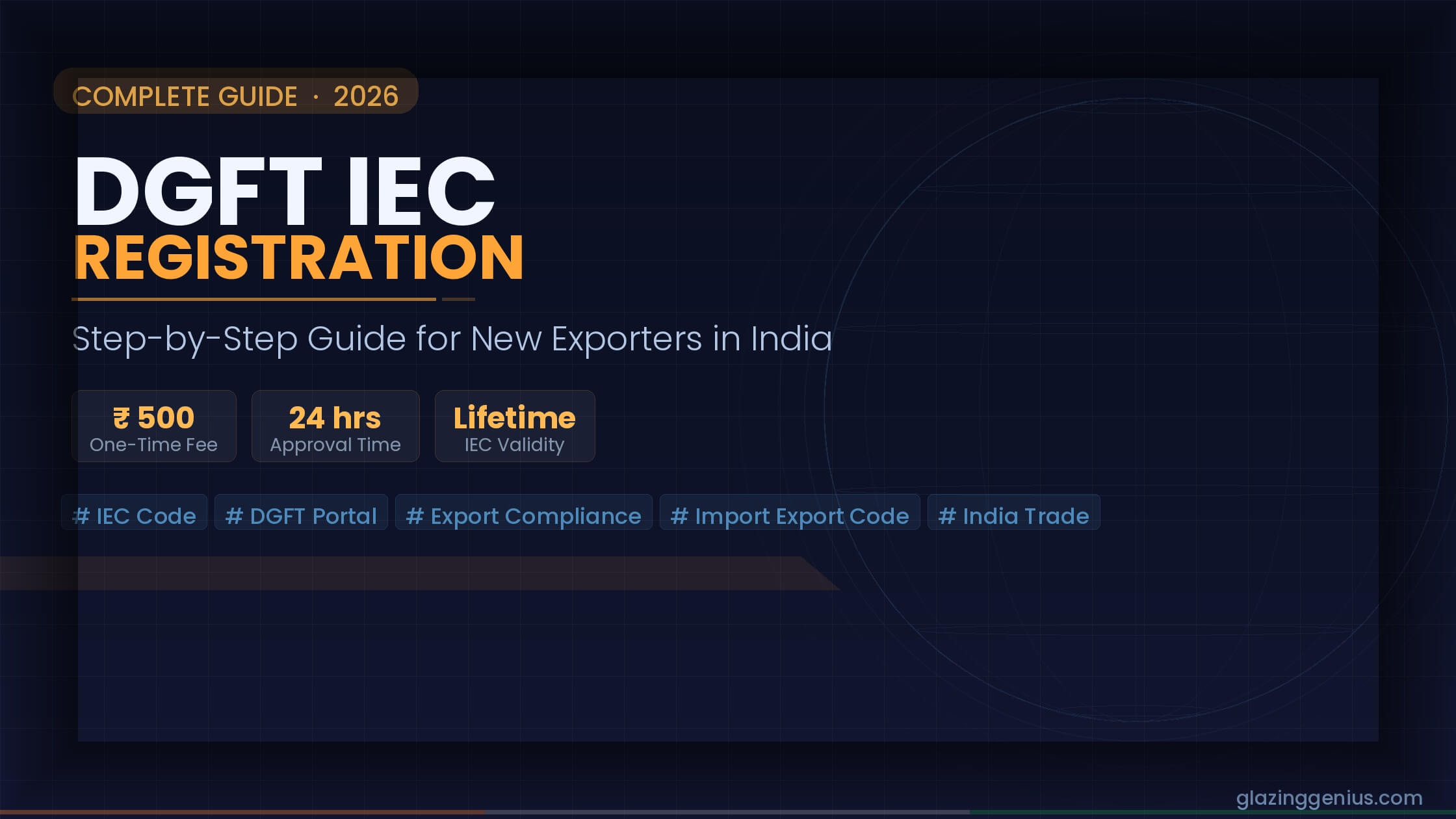
DGFT IEC Registration: Step-by-Step Guide for New Exporters
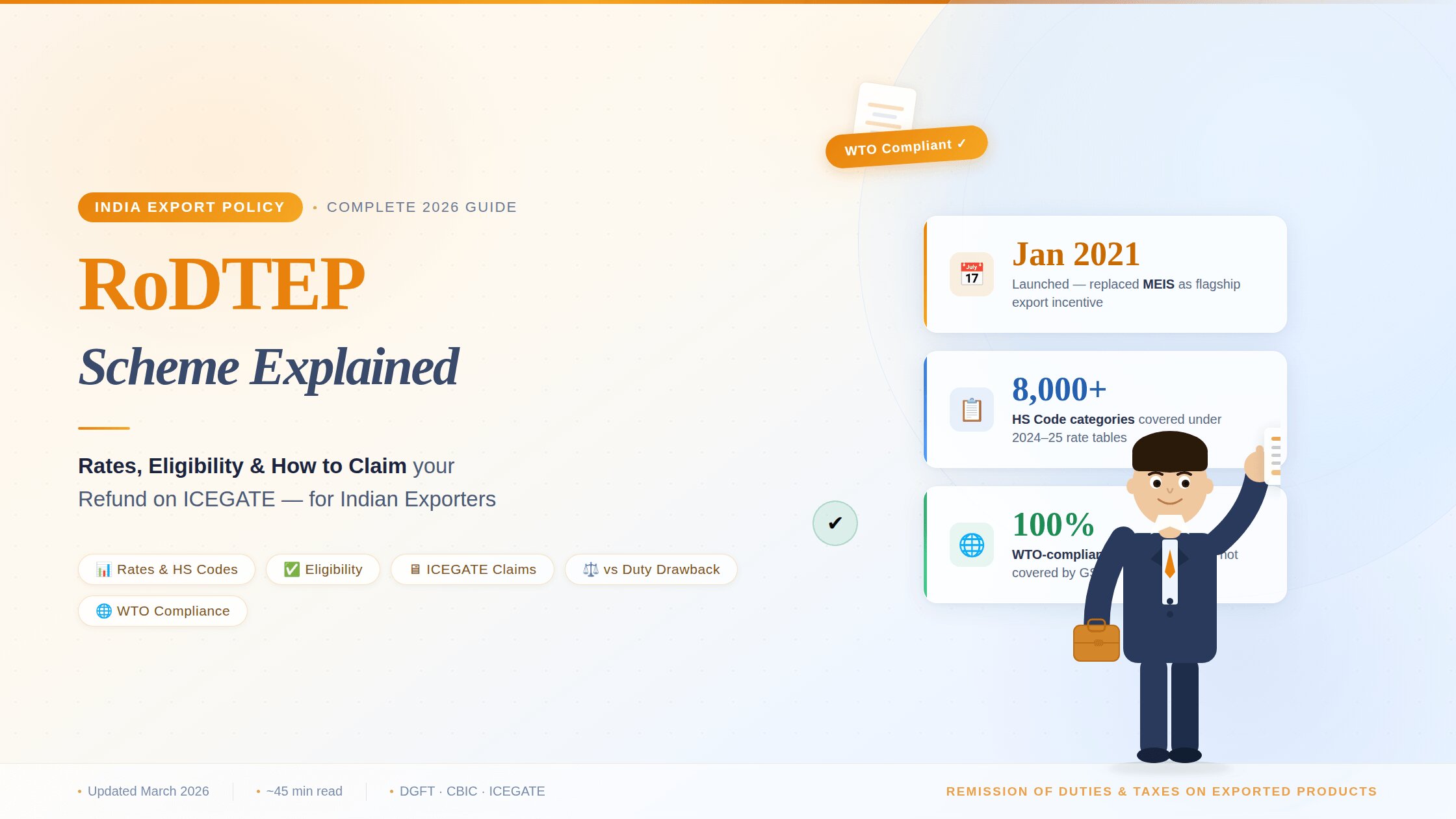
RoDTEP Scheme Explained: Understand How to Claim Your Refund in 2026