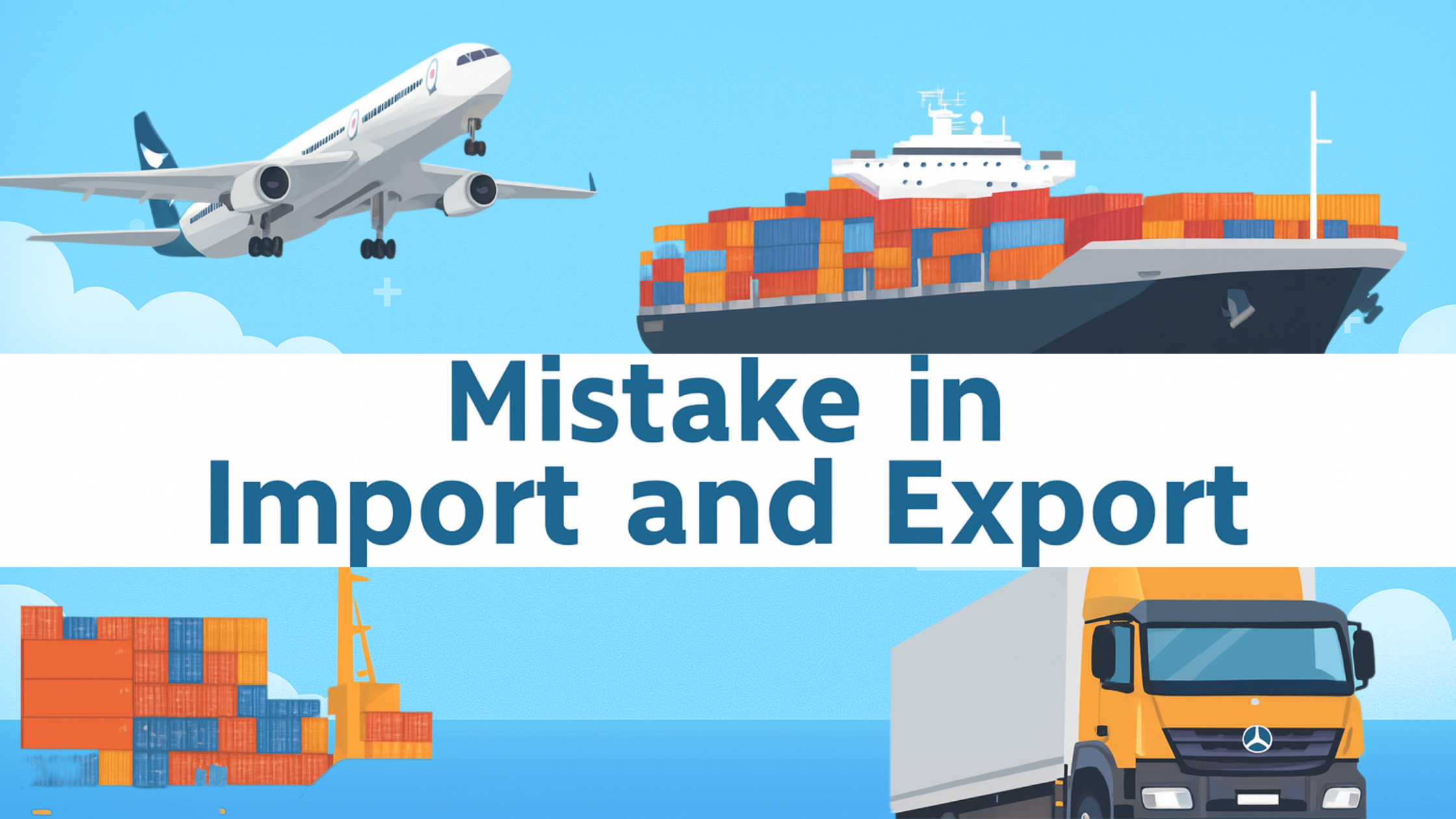
Mistakes to Avoid in Export and Import
As we do mistakes in every field, the same happens here also, as we commit mistakes which generally occur to those who are new in this field and also to those who do not pay attention and do not follow the government guidelines and regulations that we have to follow. In the import and export business, a mistake means loss in business, which affects our market status and our reputation before clients, and this indirectly affects our business in the future to sustain. So, below is the list of mistakes which we have to avoid, mentioned below.
List of Mistakes to avoid are-
- Incomplete or Incorrect Documentation
- Poor Understanding of International Market Requirements
- Miscalculation of Pricing, Duty, and Hidden Costs
- Selecting Unreliable Suppliers or Buyers
- Weak Packaging and Labelling Standards
- Not Following Compliance and Regulatory Rules
- Improper Shipping Method or Freight Selection
- Ignoring Quality Inspection Before Shipment
- Unclear Payment Terms and Currency Risk
- Lack of After-Sales Communication or Support
Key Insights for the Blog
- Export-import success depends on research, compliance, and reliable partnerships.
- Most mistakes occur due to lack of knowledge, improper documentation, and poor cost analysis.
- Avoiding these mistakes helps businesses save time, reduce losses, and build long-term global relationships.
- Understanding taxation, policies, and logistics ensures smoother international trade operations.
- New traders should focus on verification, planning, and continuous learning.
Why Avoiding Import-Export Mistakes Matters
The import and export business is a very crucial field, where even small mistakes can result in serious losses. Errors in documentation, compliance, or communication not only reduce profits but also lead to the loss of clients, which indirectly affects our market reputation and business value. This makes it harder for companies to grow in the future and to sustain their position in a competitive global market.
Since import and export is an international trade activity, maintaining a strong professional image is extremely important. Building trust with overseas buyers and suppliers takes time, and a single mistake can damage years of credibility. Clients across the world prefer dealing with exporters who follow regulations, deliver on time, and maintain transparency. A consistent and reliable track record helps attract better business opportunities.
Moreover, international clients carefully review the exporter’s past performance, documentation accuracy, shipment history, timely delivery records, and service quality. These factors help them decide whether they should enter into long-term trade relationships. That is why it is essential for businesses to stay updated with global trade rules, government policies, and compliance requirements to avoid penalties and unnecessary delays.
Strong communication, proper cost calculation, reliable suppliers, and complete documentation also play a vital role in ensuring smooth transactions. Businesses that follow these practices are more likely to build lasting global relationships and achieve long-term success in the export-import industry.
Poor Market Research and Wrong Product Selection
In Import and Export Business the Poor Market Research and Wrong Production Selection here effect more and it leads to-
1. Lack of Buyer Analysis
Not researching buyer preferences, quality expectations, or purchasing patterns leads to selecting products that do not match market needs. Without understanding who the buyer is and what they value, exporters may face low demand, customer dissatisfaction, and weak long-term business relationships.
2. Ignoring Demand–Supply Trends
Failing to study global demand–supply cycles results in choosing products with declining interest or excess competition. Market trends shift quickly, and ignoring these indicators can cause unsold inventory, reduced margins, and poor financial decisions that slow export growth and sustainability.
3. Misunderstanding Cultural, Pricing, or Regulatory Needs
Overlooking cultural preferences, local pricing standards, or mandatory regulations can lead to selecting unsuitable or non-compliant products. When exporters do not adapt to language, labeling, safety standards, or price expectations, they risk rejection, penalties, and losing foreign buyers’ trust.
Miscalculating Total Costs and Profit Margins
1. Hidden charges: freight, duties, insurance
Many exporters ignore hidden expenses like freight charges, customs duties, insurance, and handling fees. These overlooked costs significantly increase the final shipment value. Without considering them in advance, businesses may underprice products, harming profitability and creating financial gaps during international transactions.
2. Incorrect costing leads to losses
When exporters calculate costs incorrectly—by excluding logistics, compliance fees, or currency fluctuations—they risk selling at a loss. Wrong pricing directly affects margins, making businesses uncompetitive and financially unstable. Accurate costing is essential to maintain sustainable profits and long-term market success.
3. Importance of accurate landed cost calculation
Landed cost includes product cost, transport, duties, taxes, and additional charges. Calculating it precisely helps determine correct pricing, competitive margins, and final profitability. Exporters who evaluate complete landed cost can avoid surprises, negotiate better rates, and plan more strategically for global markets.
Working With Unverified or Unreliable Suppliers/Buyers
Working with unverified or unreliable suppliers and buyers can expose any business to significant risks. When there is no due diligence, companies often enter into deals without properly checking the credibility, financial stability, or past performance of the other party. This lack of verification increases the chances of facing fraud risks and non-delivery issues, where businesses may pay for goods that never arrive or receive poor-quality products that damage their reputation and profitability.
To avoid such losses, the importance of background verification cannot be overstated. Conducting thorough checks—such as reviewing trade history, certifications, compliance records, and customer feedback—helps ensure trustworthiness and reliability. Proper verification safeguards your operations, builds long-term partnerships, and strengthens the overall supply chain. Businesses that prioritize due diligence are better protected against scams and can operate with confidence in global trade environments.
Documentation Errors That Delay Shipments
Inaccurate Invoices
Inaccurate invoices create major delays during customs clearance, as mismatched values, product descriptions, or HS codes trigger verification checks. Even small errors can raise suspicion, resulting in inspections, penalties, or shipment holds. Ensuring precise and complete invoice details helps maintain smooth shipping flow and prevents unnecessary interruptions in international trade.
Missing Certificates
Missing certificates—such as COO, phytosanitary, fumigation, or compliance documents—can immediately halt shipments at ports. Authorities require these certificates to confirm product authenticity, safety, and regulatory compliance. Without proper documentation, goods may face extended delays, additional testing, or even rejection. Preparing all required certificates in advance ensures faster, hassle-free shipment processing.
Incorrect Shipping or Packaging Documents
Incorrect shipping or packaging documents, including wrong weights, container numbers, packaging details, or labels, can disrupt logistics and create confusion during transit. Such errors often lead to re-verification, re-packaging, or customs intervention. Accurate and properly filled documents help avoid delays, reduce operational costs, and ensure shipments reach their destination on time.
Lack of Logistics Planning
Here we consider some of the lack related to the Logistic Planning are as follows-
Choosing Wrong INCOTERMS
Choosing the wrong INCOTERMS can cause confusion over responsibilities, costs, and risk transfer between buyer and seller. Misinterpretation often leads to unexpected charges, disputes, or shipment delays. Selecting the correct INCOTERM ensures clarity in logistics duties, smooth coordination, and proper risk management throughout the international trade process.
Shipping Delays
Shipping delays occur when logistics planning is weak, leading to poor carrier selection, inadequate scheduling, or misaligned transit times. These delays can disrupt supply chains, increase storage costs, and damage business relationships. Effective planning, real-time tracking, and proactive coordination help ensure timely deliveries and reduce operational inefficiencies.
Inadequate Insurance
Inadequate insurance exposes shipments to financial risks from damage, theft, or unforeseen incidents during transit. Without proper coverage, businesses may face heavy losses and complex claims. Selecting the right cargo insurance based on shipment value and route ensures better protection, smooth claims processing, and greater confidence in global trade operations.
Not Staying Updated With GST, Customs & Trade Policies
Wrong Tax Calculation
Wrong tax calculation occurs when businesses fail to stay updated with current GST and customs rules. Outdated rates, incorrect classifications, or missed exemptions can lead to penalties, higher costs, and complian issues.Regularly reviewing tax updates ensures accuracy, prevents financial losses, and supports smooth import-export operations.
Missing Export Benefits
Missing export benefits often happens when companies are unaware of new schemes, incentives, or regulatory changes. Lack of knowledge about duty drawbacks, RoDTEP, or MEIS alternatives results in lost financial advantages. Staying informed about government policies helps exporters claim rightful benefits, improve profitability, and maintain competitive pricing in global markets.
Frequent Policy Changes
Frequent policy changes in GST, customs, and trade regulations demand continuous monitoring. Businesses that fail to track amendments may face compliance errors, shipment delays, or unexpected costs. Staying updated through official portals, notifications, and expert guidance ensures timely adaptation, smoother operations, and reduced risk in international trade activities.
Poor Communication With Overseas Partners
Misunderstanding Terms
Misunderstanding trade terms often occurs when communication with overseas partners is unclear or incomplete. Differences in interpretation of pricing, delivery conditions, or quality standards can lead to disputes and shipment delays. Clear, written agreements and regular confirmations help ensure both parties share the same expectations throughout the transaction.
Cultural and Language Barriers
Cultural and language barriers can easily disrupt international business coordination. Miscommunication, tone misinterpretation, or incorrect translations may affect negotiations, timelines, and trust. Understanding cultural norms, using simple language, and relying on professional translators or digital tools can significantly improve clarity and strengthen relationships with overseas partners.
Documentation Mismatch
Documentation mismatch arises when suppliers and buyers fail to align on the required formats, details, or compliance standards. Even small inconsistencies in invoices, packaging lists, or certificates can delay customs clearance. Maintaining clear communication, sharing templates, and cross-verifying details prevent costly errors and ensure smooth international trade operations.
Conclusion:
Avoiding common mistakes in export and import is essential for building a strong, reliable, and globally competitive business. When companies focus on accurate documentation, proper planning, trusted partnerships, and compliance, they move closer to an error-free import-export business. With the right systems and awareness, long-term success becomes not only achievable but sustainable.
FAQs:
1. What are the most common mistakes in export and import business?
Common mistakes include documentation errors, choosing unreliable suppliers, incorrect INCOTERMS, poor logistics planning, and lack of regulatory compliance.
2. How do documentation errors affect international shipments?
Incorrect or incomplete documents can delay customs clearance, cause fines, or even result in shipment rejection.
3. Why is supplier verification important in international trade?
Verifying suppliers prevents fraud, ensures product quality, and minimizes risks related to non-delivery or unreliable partners.
4. How do wrong INCOTERMS create problems?
Incorrect INCOTERMS can confuse responsibilities, increase unexpected costs, and create disputes between buyers and sellers.
5. What steps help prevent shipping delays?
Proper logistics planning, selecting reliable carriers, real-time tracking, and timely documentation help avoid delays.
6. How can businesses avoid calculation errors in duties and taxes?
Staying updated with GST, customs rates, and trade policies ensures accurate costing and avoids penalties.
7. What role does communication play in import-export success?
Clear communication with overseas partners prevents misunderstandings, documentation mismatches, and contract disputes.
8. Why is background verification essential for buyers and sellers?
It ensures trust, reduces fraud risks, and helps build long-term, stable trade relationships.
9. How can poor packaging lead to trade mistakes?
Improper packaging may cause product damage, rejection, or additional charges during transit.
10. What is the best way to build a mistake-free import-export business?
Invest in knowledge, maintain accurate documentation, stay compliant, verify partners, and adopt reliable logistics processes.
Related Posts:
DGFT IEC Registration: Step-by-Step Guide for New Exporters
RoDTEP Scheme Explained: Understand How to Claim Your Refund in 2026