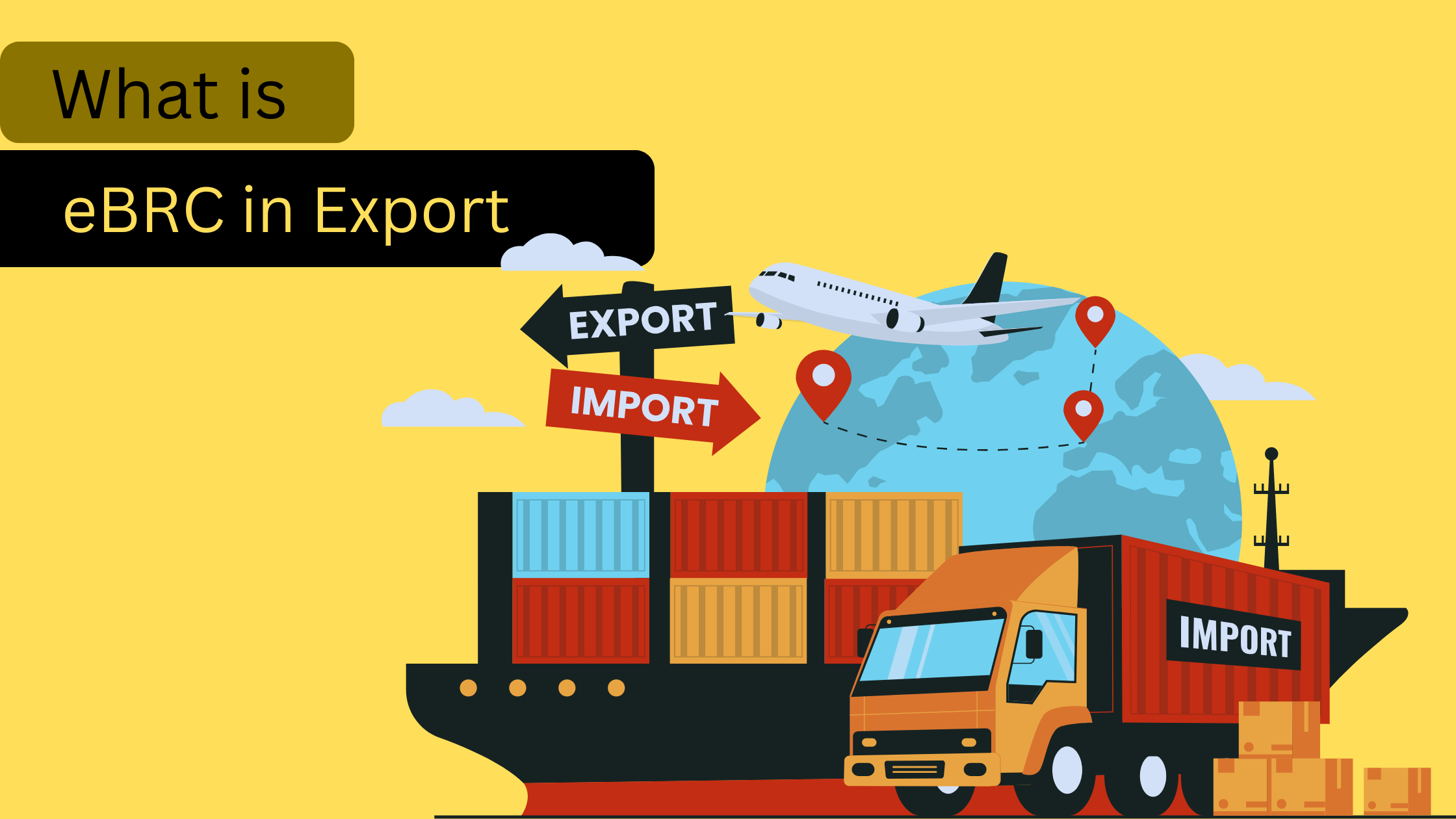
What is eBRC (Electronic Bank Realization Certificate)?
The eBRC (Electronic Bank Realization Certificate) is a digital document issued by banks to confirm that an exporter has received payment from a foreign buyer for goods or services exported. It acts as official proof of foreign exchange realization and ensures transparency in export transactions. Introduced under the DGFT (Directorate General of Foreign Trade) framework, eBRC plays a vital role in enabling exporters to claim incentives and benefits under government export promotion schemes like RoDTEP, MEIS, and SEIS. This electronic system simplifies documentation, reduces manual errors, and integrates banks directly with the DGFT portal. With eBRC, exporters can easily validate their export proceeds online, ensuring compliance and faster disbursement of incentives. In short, eBRC is an essential digital tool that supports India’s move toward paperless, transparent, and efficient export management.
Key Insights:
- eBRC is crucial for exporters to prove receipt of export payments digitally.
- It enables exporters to claim DGFT incentives seamlessly.
- Strengthens India’s digital trade ecosystem by integrating banks, DGFT, and RBI data.
- Reduces fraud and manual errors, ensuring faster export compliance.
Importance of eBRC for Exporters
The Electronic Bank Realization Certificate (eBRC) is a crucial document for Indian exporters as it confirms the realization of export payments in foreign currency. Issued electronically by banks and linked to the DGFT (Directorate General of Foreign Trade) system, eBRC ensures that exporters have received payment for their export shipments.
One of the primary advantages of eBRC is that it enables exporters to claim benefits under DGFT schemes such as MEIS, RoDTEP, and SEIS. These incentives play a vital role in reducing export costs and enhancing the global competitiveness of Indian goods. Without an eBRC, exporters cannot access these government benefits, making it essential for every export transaction.
Additionally, eBRC promotes transparency and compliance in foreign trade transactions. Since the data is shared directly between banks, the DGFT, and the RBI, it eliminates manual errors, fraud risks, and delays in verification. The digital nature of eBRC allows real-time verification of export proceeds with official records, ensuring regulatory compliance and faster incentive processing.
Overall, eBRC not only simplifies export documentation but also strengthens trust and efficiency in India’s export ecosystem, making it an indispensable tool for every exporter.
How to Obtain an eBRC
Step-by-step:
1. Complete the export shipment
Export goods, raise the commercial invoice and pack & ship the consignment. Obtain the Shipping Bill / Bill of Export and transport documents (Bill of Lading for sea / Airway Bill for air).
2. Invoice & documents to bank
Submit export documents to your bank (exporter’s bank branch) soon after shipment. Typical documents: commercial invoice, packing list, shipping bill, Bill of Lading/AWB, purchase order, and any certificates of origin or quality required.
3. Record of inward remittance / realization
Ensure the foreign buyer makes payment in foreign currency to your designated bank account. The bank must receive and credit the inward remittance (full or part) against the export.
4. Bank verifies payment against shipping bill
The bank maps the foreign inward remittance to the relevant Shipping Bill / Invoice (using invoice no., shipping bill no., and IEC). Bank checks exchange realization, conversion details, and compliance with FEMA/KYC norms.
5. Bank prepares eBRC data upload
After verification, the bank prepares the eBRC record (electronic data) with details such as exporter IEC, shipping bill number, invoice number, currency, amount realized, and date of realization.
6. Bank uploads eBRC to DGFT server
The authorized bank uploads the eBRC data into the DGFT eBRC system (bank-side portal). This is the official step that creates the eBRC entry.
7. Bank issues acknowledgement to exporter
Some banks will give you an acknowledgement or reference once they upload the eBRC—ask the bank for this confirmation or a copy of the upload receipt.
8. Exporters check eBRC on DGFT portal
Log in to the DGFT portal (using IEC login) and go to the eBRC / Bank Realisation section to verify the eBRC has been posted against your shipping bill. You should be able to download the eBRC document if available.
9. Download and store eBRC
Download the eBRC PDF (or save the electronic reference). Keep it with your export records — it is required to claim DGFT incentives (RoDTEP, SEIS, earlier MEIS), and for audits.
10. Use eBRC for incentive claims
While filing claims on DGFT (or when uploading documents for incentive schemes), attach or reference the eBRC so authorities can verify export payment realization here in it.
eBRC and DGFT – The Digital Integration
The eBRC (Electronic Bank Realization Certificate) system represents a major digital integration between Indian banks and the Directorate General of Foreign Trade (DGFT). It ensures that export payment realizations are recorded electronically, eliminating the need for physical documentation. When a bank uploads eBRC data, it automatically syncs with the DGFT portal through a secure digital interface. This seamless connection enhances transparency, speeds up the verification process, and enables exporters to claim incentives quickly and accurately.
The DGFT uses eBRC data to verify that export payments have been received in full and in compliance with RBI guidelines. This digital linkage between banks, DGFT, and the RBI ensures reliable, transparent, and real-time reporting of export proceeds. By reducing manual paperwork and eliminating errors, the eBRC system simplifies export documentation, strengthens compliance, and empowers exporters to efficiently access benefits under schemes like RoDTEP, SEIS, and MEIS.
Benefits of eBRC System
- Simplifies export documentation – eliminates the need for manual paper certificates.
- Faster incentive claims – helps exporters quickly avail DGFT schemes like RoDTEP, MEIS, and SEIS.
- Ensures transparency – digital verification reduces the risk of fraud and misreporting.
- Saves time and effort – fully online process reduces manual errors and administrative delays.
- Supports compliance – ensures all export payments are correctly reported and verified.
- Boosts exporter credibility – authentic and verifiable digital records improve trust in global trade.
Conclusion:
The eBRC system is a cornerstone of India’s modern export framework, fostering transparency, digitalization, and efficiency in trade operations. By ensuring accurate tracking of export payments and seamless data exchange between banks, DGFT, and RBI, it accelerates incentive disbursement and minimizes manual errors. Moreover, eBRC reinforces the compliance structure of India’s export system, ensuring every transaction is verified and documented digitally. Its implementation not only simplifies the process for exporters but also strengthens the integrity and reliability of India’s international trade ecosystem.
FAQs:
1. What is an eBRC in export documentation?
The eBRC (Electronic Bank Realization Certificate) is a digital document issued by banks confirming that an exporter has received payment from a foreign buyer for exported goods or services. It serves as official proof of export payment realization.
2. Why is eBRC important for exporters?
eBRC is crucial for exporters because it is required to claim government export incentives under DGFT schemes like RoDTEP, MEIS, and SEIS. It also ensures transparency and compliance with foreign trade regulations.
3. How can an exporter obtain an eBRC?
Exporters can obtain an eBRC through their respective banks once export payment is received. The bank uploads the eBRC data to the DGFT portal, which exporters can access digitally using their IEC code.
4. What is the role of DGFT in the eBRC system?
DGFT uses eBRC data to verify export payments, process export incentives, and ensure compliance with RBI and foreign trade guidelines. This digital link between banks, DGFT, and RBI ensures secure, transparent reporting.
5. Can an exporter check or download their eBRC online?
Yes. Exporters can log in to the DGFT portal using their credentials and IEC number to view, verify, or download their issued eBRCs for export incentive claims or record purposes.
Related Posts:
DGFT IEC Registration: Step-by-Step Guide for New Exporters
RoDTEP Scheme Explained: Understand How to Claim Your Refund in 2026