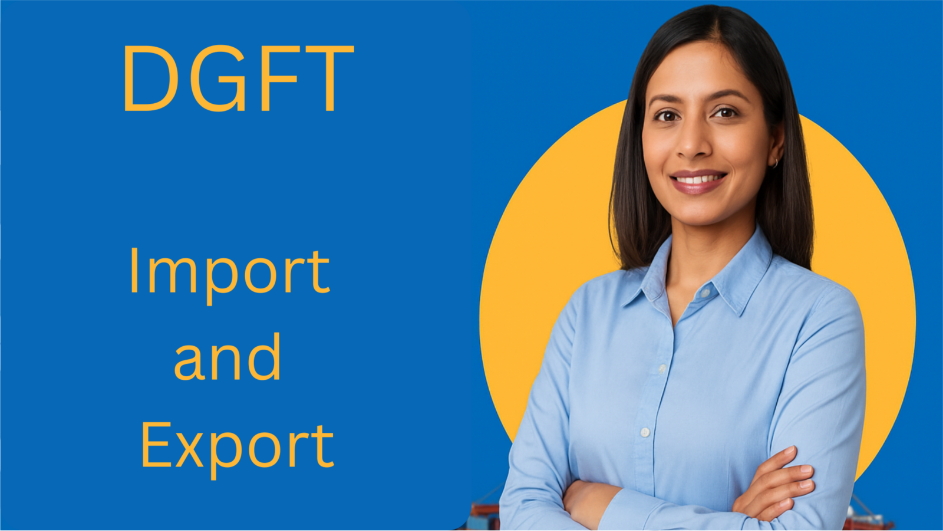
Role of DGFT in Export and Import
The Directorate General of Foreign Trade (DGFT) is a central government agency responsible for regulating and operating India’s import and export activities. It plays a crucial role in formulating and implementing the Foreign Trade Policy, aiming to promote, facilitate, and streamline international trade.
This article provides an overview of the DGFT’s role, objectives, and functions in regulating India’s export and import trade.
Key Insights
- DGFT role is to frames and implements the Foreign Trade Policy (FTP) of India.
- It issues Import-Export Code (IEC) and other various export promotion licenses.
- Simplifies export-import documentation and promotes digital trade procedures.
- Administers schemes like RoDTEP, EPCG, SEIS, and Advance Authorisation to boost exports.
- Ensures compliance with trade laws and monitors restricted or prohibited items.
What is the Directorate General of Foreign Trade (DGFT)?
The Directorate General of Foreign Trade (DGFT), functioning under the Ministry of Commerce and Industry, regulates and facilitates India’s import and export activities. Established after economic liberalization in 1991, it replaced the Chief Controller of Imports and Exports (CCI&E), shifting its focus from strict controls to promoting and facilitating international trade.
DGFT formulates and implements the Foreign Trade Policy, grants export licenses and authorizations, monitors compliance, provides trade incentives, and fosters strong international trade relations. Import-export training courses offer practical knowledge and insights into its operations and procedures.
Key roles of the DGFT
The Directorate General of Foreign Trade (DGFT) has several key objectives aimed at promoting and regulating India’s international trade:
- Implement Policy: It enforces India’s foreign trade policy to boost exports and support the expansion of national trade, promoting the growth of both goods and services across global markets.
- Licensing and Regulation: DGFT grants Importer-Exporter Code licenses and regulates, monitors, or restricts trade operations according to government policies.
- Trade Facilitation: DGFT facilitates trade by maintaining consistent policies, simplifying procedures, and strengthening commercial relations with foreign countries.
- Data and Systems: It manages a comprehensive record of exporters and importers while updating and revising ITC-HS codes, which categorize products for smooth classification in international import and export operations.
- Compliance and Monitoring: The DGFT Monitors the exporters issue and compliance and tries to fulfillment the obligations faced by exporters and importers and handles quality complaints from foreign buyers.
- Dispute Resolution: It promotes alternative dispute resolution methods such as arbitration and mediation and assists stakeholders in navigating the World Trade Organization (WTO) framework for resolving international trade-related conflicts.
- Support for MSMEs: It offers various incentives and assistance to Micro, Small, and Medium Enterprises (MSMEs) to strengthen their operations, enhance competitiveness, and promote sustainable growth in both domestic and global markets.
Role of DGFT in Export Promotion
The Directorate General of Foreign Trade (DGFT) plays a key role in boosting India’s export sector by designing and executing effective trade policies that strengthen the country’s global competitiveness. It supports exporters through various schemes and incentives like-
RoDTEP-
The RoDTEP Scheme refunds embedded taxes and duties to exporters, enhancing cost efficiency and boosting India’s global export competitiveness.
EPCG-
The EPCG Scheme allows duty-free import of capital goods to enhance production quality and capacity, promoting competitiveness and growth in exports.
Advance Authorization-
The Advance Authorization Scheme allows duty-free import of raw materials used in export production, reducing costs and boosting export competitiveness.
Here these all scheme help us in minimize costs and promote international trade participation. DGFT simplifies export documentation, issues the mandatory Importer-Exporter Code (IEC), and ensures adherence to international trade regulations. Through digital systems, policy reforms, and ease-of-doing-business initiatives, DGFT improved export efficiency and transparency nationwide.It works with export promotion councils to discover markets, strengthen partnerships, and expand India’s global trade presence. Overall, DGFT connects exporters and government, driving growth, innovation, and competitiveness across India’s export ecosystem.
Role of DGFT in Import Regulation
DGFT plays a vital role in regulating imports to maintain balanced trade and protect India’s economic interests. It frames and enforces import policies that align with national priorities while maintaining smooth and legal import operations. DGFT issues Importer-Exporter Codes (IEC) and licenses for restricted or prohibited goods, ensuring compliance with international and domestic regulations. Using digital platforms, DGFT simplifies import documentation, enabling businesses to access permissions and track transactions easily. It also updates the ITC-HS classification to standardize goods and prevent illegal or unfair trade practices.DGFT also works with government departments to monitor import trends, balance trade, and support import-dependent industries. Overall, DGFT ensures that India’s import system remains transparent, efficient, and aligned with global trade standards.
Support for MSMEs and Startups
DGFT empowers MSMEs and startups by offering policy support, incentives, and export facilitation schemes globally. It provides simplified registrations, lower compliance, and schemes like RoDTEP, EPCG, and Advance Authorization to reduce costsDGFT helps MSMEs obtain mandatory IEC through a fully digital platform ensuring convenience and transparency.It partners with Export Promotion Councils to conduct training, trade fairs, and awareness programs for startups.By easing processes, speeding approvals, and offering support, DGFT drives innovation and inclusive trade growth nationwide.
Conclusion:
The Directorate General of Foreign Trade plays a key role in shaping India’s trade framework by managing export and import policies. Through schemes like RoDTEP, EPCG, and Advance Authorization, DGFT promotes exports, ensures fair imports, and simplifies trade procedures. DGFT acts as a vital bridge between the government and traders, empowering MSMEs and startups to compete globally with confidence. By adapting to global trends, encouraging digital transformation, and improving ease of doing business, DGFT strengthens India’s trade position. These initiatives collectively drive sustainable economic growth and support long-term development across India’s expanding global trade ecosystem.
Frequently Asked Questions (FAQs)
1. What is the main function of DGFT?
DGFT formulates and implements India’s foreign trade policy, promoting exports and regulating imports to enhance the country’s global trade competitiveness.
2. How does DGFT support exporters?
DGFT provides export incentives, simplifies documentation, and offers RoDTEP, MEIS, and EPCG schemes to reduce costs and boost global trade.
3. What is the Importer-Exporter Code (IEC)?
The IEC is a mandatory 10-digit code issued by DGFT that allows businesses to undertake import or export activities legally in India.
4. How does DGFT help MSMEs and startups?
DGFT provides simplified processes, financial benefits, and awareness programs to help MSMEs and startups expand their business globally.
5. Is DGFT registration mandatory for all exporters and importers?
Yes, obtaining an IEC from DGFT is essential for any business involved in import or export activities.
6. How does DGFT promote ease of doing business?
DGFT has digitized most of its services, allowing online filing, faster approvals, and transparency in export-import processes here in it.
Related Posts:
DGFT IEC Registration: Step-by-Step Guide for New Exporters
RoDTEP Scheme Explained: Understand How to Claim Your Refund in 2026