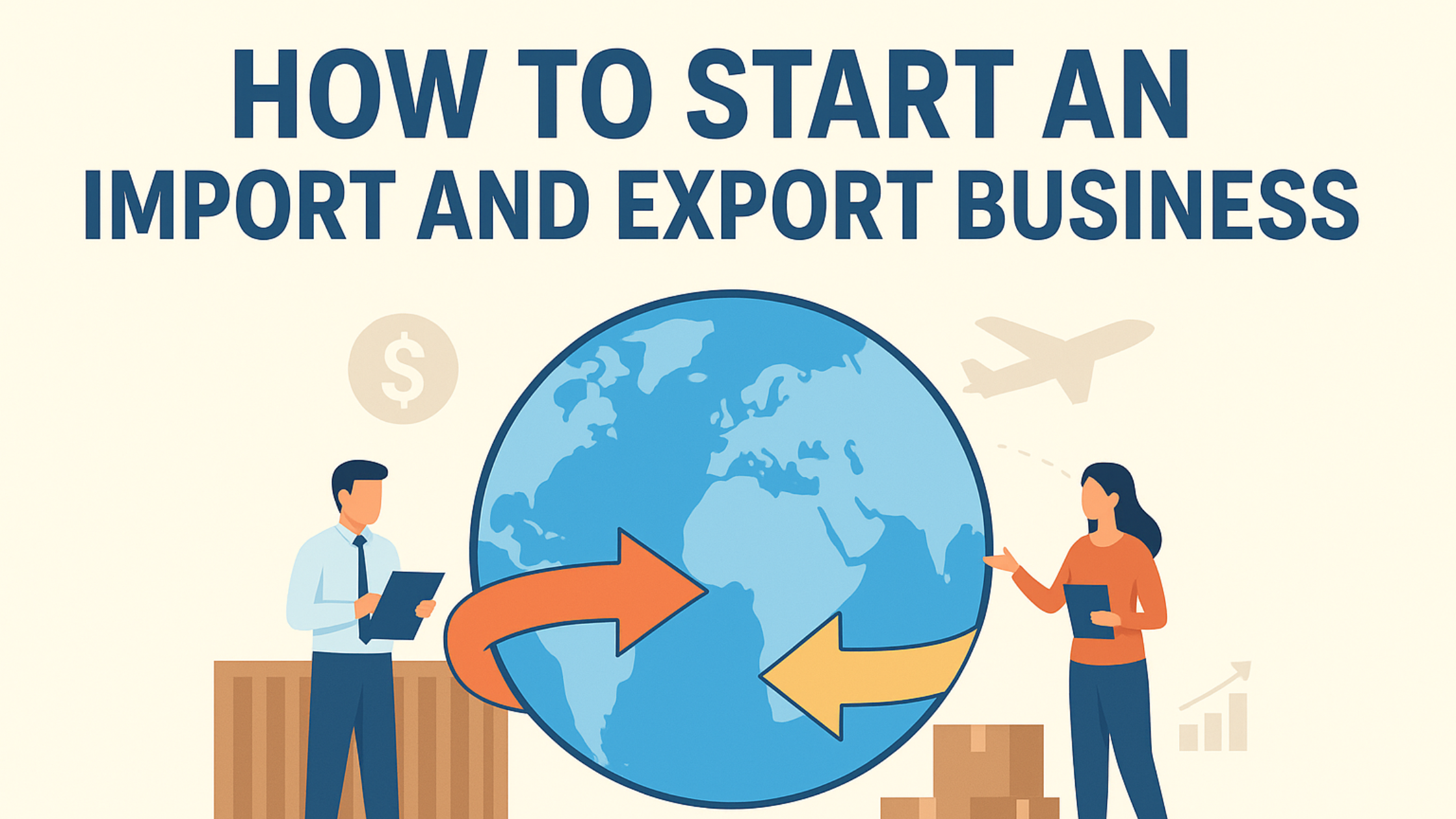
How to Start an Import-Export Business in India
If you’re planning to start an export-import business, you must understand trade laws, customs regulations, duties and subsidies, and supply chain management. A clear strategy and compliance are key to building a successful and sustainable global venture. Explore our guide to learn how to effectively start and grow your import-export business.
Key Insights
- Starting an import-export business connects Indian products with global markets, driving international trade opportunities.
- Mandatory IEC and GST registration, financial planning, and legal compliance are essential for smooth operations.
- Choosing the right business model and entity type, along with strong networks and digital marketing, ensures sustainable global growth.
What is an Import Export Business?
An import-export business involves buying and selling goods or services between countries. Importing means bringing products into a country from abroad, while exporting means sending locally made goods to foreign markets. This exchange helps countries get products they don’t produce and supports economic growth through global trade.
To succeed in import-export, understand trade laws, customs, logistics, and market trends. Build strong global supplier and buyer relationships and plan effectively for sustainable growth.
Types of Import and Export Business
There are basically two types of Businesses-
Product Based
Services Based
Product Based
1. Direct Import/Export (Manufacturer or Merchant)
You directly engage in international trade by buying or selling goods between countries, either by manufacturing products for export (manufacturer exporter) or sourcing them for global markets (merchant exporter).
2. Specialist Intermediary (EMC/ETC)
A specialist intermediary, such as an Export Management Company (EMC) or Export Trading Company (ETC), acts as a professional middleman or agent that facilitates international trade for manufacturers without export experience or global networks. These companies handle export operations, identify foreign buyers, and streamline cross-border transactions.
3. Cross-Border E-commerce & Franchise Trading
This type of international business expands global reach through digital platforms and franchise partnerships. It includes drop-shipping, where products are sold worldwide without maintaining inventory, and the exchange of franchise rights to establish a brand presence overseas.
4. Trading Company
A trading company acts as both importer and exporter, handling multiple products across industries. It focuses on building supplier and buyer networks to manage goods in both directions efficiently.
Services Based
- Services (Intangible Offerings)
- Export–Import Procurement Agent
- Export–Import Agent
1. Services (Intangible Offerings)
Services are intangible products that provide value through skills, expertise, or experience. They can be delivered digitally or through professional engagement without physical shipment, such as consulting, education, and solutions.
2. Export–Import Procurement Agent
An Export–Import Procurement Agent connects buyers and suppliers globally, managing sourcing, purchasing, documentation, and shipping. They ensure quality products, competitive prices, and smooth logistics while handling customs and compliance. Their key role is to simplify international trade and make import–export operations efficient and cost-effective for businesses.
3. Export–Import Agent
An Export–Import Agent acts as a link between domestic sellers and foreign buyers, helping negotiate deals, manage documentation, and ensure regulatory compliance. They earn commissions for facilitating trade and handle logistics, communication, and legal tasks to ensure smooth, secure, and profitable international business transactions.
How to Start an Import and Export Business
Starting an export-import business requires planning, compliance, and strategy to connect Indian products with global markets. Here are the key steps:
Step1: Choose Your Import Export Niche
Choose a primary product or service category to strategically focus on your resources and achieve sustainable growth, such as agriculture, textiles, manufacturing, or specialized services.
Step 2: Create a Plan and Strategy for Import Export Business
Create a clear and detailed strategy, especially if you are planning to start an import and export business in India with limited capital.
Step 3: Have a PAN and open the Bank Account
Obtain PAN for the business/entity and open a current bank account in the business name — required for IEC and trade transactions.
Step 4: Apply for Importer-Exporter Code (IEC) on DGFT portal
IEC is mandatory for starting or running the import or export business. Then we have to apply online at the DGFT portal; we need PAN, and a bank certificate/cancelled cheque, and address proof for it. IEC is PAN-based and typically issued online.
Step 5: Register on ICEGATE / Customs portals & obtain required authorisations
If your turnover or business model requires GST, register and ensure HSN/SAC codes are correctly used in invoices. Also check industry-specific licences (food, pharma, SCOMET etc.).
Step 6: Decide products / markets & perform market research
Here we have to Select products with export potential or import demand. Use trade databases, govt notifications, and market research in order to choose target countries and buyers. Consider tariffs, non-tariff barriers, and required certifications for it.
Step 7: Prepare documentation & quality/compliance checks
Know we need to set document for commercial invoice, packing list, bill of lading/airway bill, shipping bill/bill of entry, certificates of origin, test reports and insurance document etc.Then ensure product compliance (standards, lab tests).
Step 8: Set up logistics & insurance partners
Then we need Partner with reliable freight forwarders and customs brokers. Decide Incoterms, shipping mode (air/sea), freight insurance and warehousing (if needed). Negotiate rates and transit times.
Step 9: Choose secure payment methods & contracts
Use Letters of Credit, bank guarantees, confirmed payment terms or escrow for risk mitigation. Always keep written contracts and clear payment milestones. (This reduces fraud and non-payment risk), and also will help in future.
Step 10: Apply for export incentives / schemes (if eligible)
Check DGFT schemes (RoDTEP, SEIS, TMA, EPCG etc.) and apply via the DGFT portal to claim duty credits or reimbursements where eligible for it.
Step 11: List your products & find buyers — digital first
Use B2B marketplaces (e.g., IndiaMART, TradeIndia, Alibaba), LinkedIn outreach, trade fairs and government export promotion councils to find verified and buyers.
Step 12: Start small, export first consignments, learn & scale
Send small test consignments, refine packaging/compliance, gather feedback, then scale volumes, add logistics efficiency and marketing (digital presence helps reach buyers).
What factors affect Import and Export Businesses?
1. Government Policies and Trade Regulations
Import–export operations depend heavily on government rules, tariffs, and customs policies. Any change in these can impact costs, product eligibility, or even market access.
2. Exchange Rate Fluctuations
Currency value changes influence pricing, profit margins, and competitiveness in global trade. A strong or weak currency can make exports cheaper or imports costlier.
3. Logistics and Transportation Costs
Efficient shipping, warehousing, and supply chain management are crucial. Rising freight costs or delays can reduce profitability and customer trust.
4. Global Market Demand and Competition
Shifts in consumer demand and global competition affect what products sell best and where opportunities exist.
5. Quality Standards and Compliance
Meeting international standards, certifications, and documentation requirements ensures smooth customs clearance and builds global buyer confidence.
Here a few reasons why you should opt for a business service for starting any business from Glazing Genius:
1. IEC Certificate: For starting any Import and Export Business we need this certificate which is compulsory for running the Business.
2. Long repayment tenure: We try to resolve the payment issue of any client which they face problem is getting to them as per the norms of the Government policy and regulations.
3. Quick approval: We provide Quick Services to our client and it can be covered under 10 to 15 days and if any futher help is required we provide to clients.
4. Competitive interest rates: Our Consultancy tries to analyse competitive interest rates on business loan and ensure that we provide our clients the best deal possible, allowing you to maximise profits and high return on it.
Conclusion:
Starting an import-export business in India offers vast opportunities to grow in global markets. With the right business model, proper registrations, and a clear strategy, you can build a strong international presence. Focus on quality, compliance, and reliable partnerships to ensure long-term success and sustainable growth in the global trade industry.
FAQs:
1. What is an import-export business?
Selling and buying goods between India and other countries.
2. Do I need a license to start an Import-Export Business?
Yes, an IEC (Import Export Code) and GST registration are mandatory.
3. Which products can I trade?
Textiles, agriculture, electronics, machinery, handicrafts, and more (subject to regulations).
4. What business structure should I choose?
Sole Proprietorship, Partnership, LLP, or Private Limited Company depending on capital and growth plans.
5. How much capital is required?
Small-scale: ₹5–15 lakhs; Medium-scale: ₹25–50 lakhs.
6. How do I find buyers and suppliers?
Use online platforms like Alibaba, IndiaMART, TradeIndia, and attend trade fairs.
7. Are there government schemes for exporters?
Yes, FIEO, MSME export promotion, ECGC insurance, and pre/post-shipment financing here in it.
Related Posts:
DGFT IEC Registration: Step-by-Step Guide for New Exporters
RoDTEP Scheme Explained: Understand How to Claim Your Refund in 2026